Asking Your Bridesmaids to Pay for Dresses You Chose: Tradition or Abuse?
You chose the style, the fabric, the length, the exact champagne tone, and the boutique. You sent the link to the group chat. And at the end, almost as an afterthought, you posted the price.
No one responded within twenty minutes. It's not that they didn't see it. They're all doing the math.
The short answer
Asking your bridesmaids to pay for their dresses isn't inherently unfair. It becomes unfair when you decide everything—style, fabric, boutique, tone, length, shoes, and payment deadline—and they're left only to provide the money. The fair rule fits in one sentence: whoever chooses, pays; whoever pays, chooses. If you want complete control of the look, you pay for the dress. If they pay, you give them a price range and real freedom within it.
It's not a dress, it's a uniform
Make an honest list of everything you decided: the style, the fabric, the boutique, the tone, the length, sometimes even the shoes and hairstyle. That's no longer "a dress for your wedding." It's a uniform designed for your wedding.
And whoever requests the uniform pays for it. No company tells their team: "I've already chosen your uniform, transfer the money by Friday."
Absolute control of the look with someone else's money. That combination doesn't come in any package.
Why no one tells you no
Being a bridesmaid feels like an honor, and declining it feels like rejecting you. That's why the friend who can't afford what you're asking doesn't say "I can't." She says "Yes, of course, bestie," and then pays it with her credit card, her rent, or the trip she had planned. You don't find out. She does, every month, for twelve months interest-free.
That's not tradition. That's taking advantage of the fact that your friend is embarrassed to say no to you.
And the fact that no one complains in the group chat doesn't mean everyone thinks it's fine. It means the uncomfortable conversation is happening in another chat. Without you.
What actually changes the answer
Not all requests carry the same weight. Four things separate what's reasonable from what's unfair.
Who chose. If they pick the style within a color palette, it's their dress and paying for it makes sense. If you chose down to the exact champagne tone, don't pass the bill to your friend.
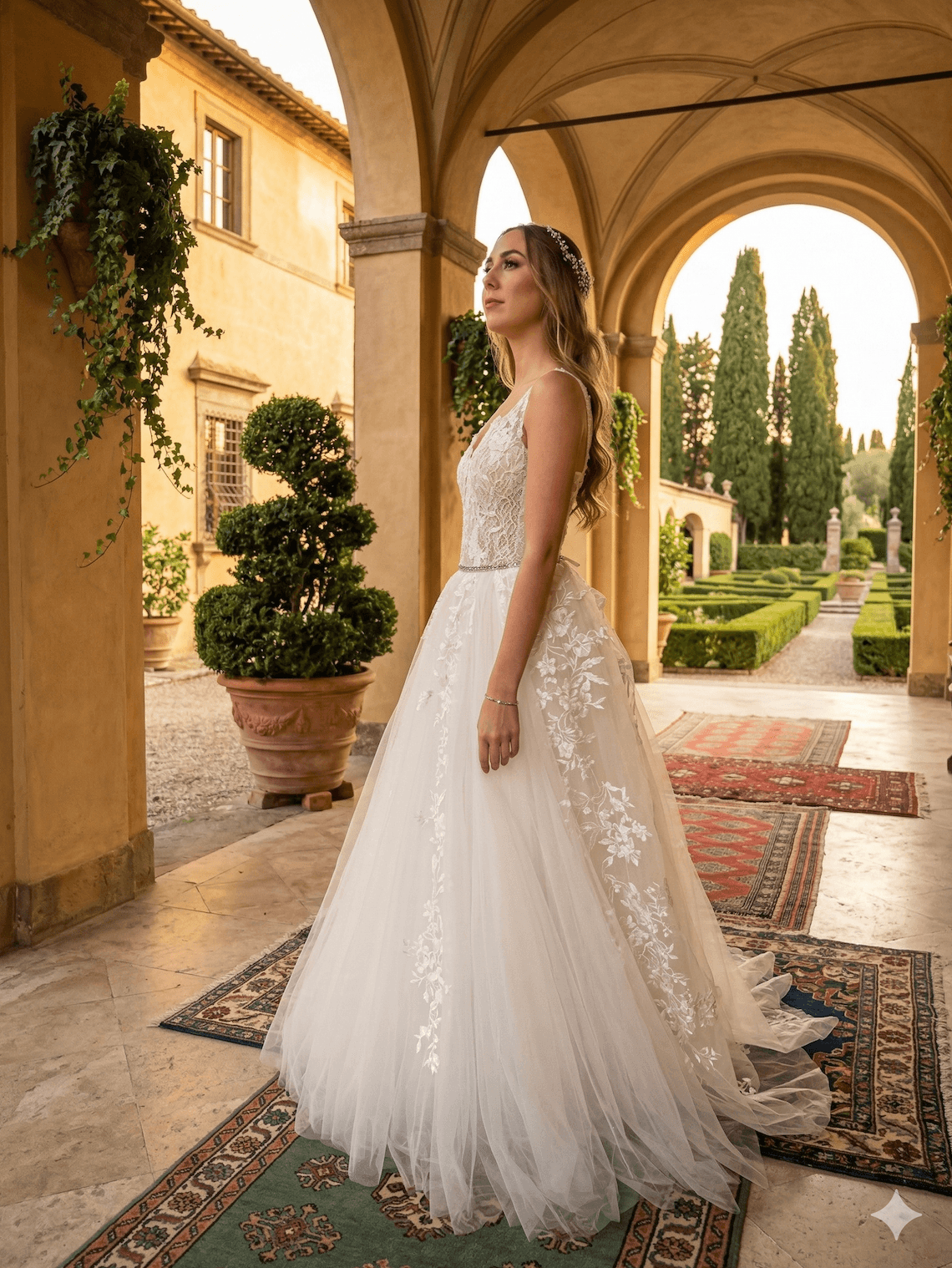
Whether it can be worn again. A long dress in a color that flatters everyone and works for another wedding is an investment. A dusty rose satin gown with a giant bow on the back is a costume for one night with the price tag of a formal gown.
Everything else you're already asking. The dress almost never comes alone: shoes, hair, makeup, a pre-wedding celebration, and if the wedding is destination, flights and a hotel room. Add it up before you send the link. A bridesmaid at a destination wedding can end up spending more than almost any other guest, and she didn't choose the date or location.
How much each one earns. Your bridesmaids don't all make the same income. What's an impulse buy for one is half a paycheck for another. If you set the price thinking about whoever earns the most, you've already decided who's going to struggle.
| If you… | Then… |
|---|---|
| Chose the style, fabric, boutique, and tone | You pay, or at least most of it |
| Chose the color and they chose the style | Each pays for hers, with a cap you agree on together |
| Plus you're asking for hair, makeup, and travel | Add the total before requesting the dress |
| You don't know what each can afford | Ask privately, never in the group chat |
What nobody says out loud
Most of the time it's not about the dress. It's about the photo. And wanting a beautiful photo is perfect. What's not perfect is charging other people for your vision of how things should look.
There's a trap on the other side too: the bridesmaid who agrees to everything and then complains to everyone except you. That's why this gets discussed early, explicitly, and with numbers. Ambiguity is exactly what resentment feeds on.
And if the dress is already paid for and someone genuinely can't afford it, don't remove her from the wedding party over money. That's something nobody forgets at the next wedding, or the one after, or the one after that.
The verdict
In our opinion, it's not unfair to ask each bridesmaid to pay for her own dress. It's unfair to take away her choice and leave her with the bill.
If the perfect look is non-negotiable for you, treat it as a wedding expense, just like your centerpieces: you pay for it. If you can't pay for it, relinquish control: color, price cap, and freedom. What you can't do is have both. Your wedding is not permission to charge your friends for your impeccable taste.
Next steps
Before you send another link, do three things today:
- Add up everything you're asking each bridesmaid to pay for: dress, shoes, hair, makeup, pre-wedding celebration, travel.
- Set a dress price cap that the bridesmaid with the tightest budget can afford without going into debt.
- Message each one privately: "Here's the plan and here's the range. If it doesn't work for you, tell me and we'll figure it out." And when you say "we'll figure it out," mean it.
If you're still building your complete budget, start with who pays for what in a wedding: the bridesmaids' dresses are just one line in that conversation. And if you're already getting quotes for your own dress, at Katiblé you can say what you need and get proposals from vendors to compare.
Frequently asked questions
Who pays for the bridesmaids' dresses?
There's no written rule. In our opinion, what's fair is that whoever chooses pays: if each bridesmaid picks her own style within a color, she pays; if the bride decides style, fabric, boutique, and tone, it's fair that the bride pays or covers most of it.
How much is it reasonable to ask them to spend?
There's no official number and any figure circulating is an estimate. What's reasonable is measured against your group: a price that the bridesmaid with the least financial flexibility can afford without going into debt, also counting hair, makeup, and travel.
Can I ask them to all wear the same dress?
You can. But if it's identical and you chose it, it's a uniform for your wedding, and whoever requests the uniform pays for it. The middle ground: set the color and length, and leave the style open.
What do I do if a bridesmaid can't afford it?
Resolve it privately and without removing her from the wedding party. You can cover the difference, lower the price cap for everyone, or let her wear a dress of her own in the same color. Excluding someone over money is what people remember years later.
Does it look bad if the bride pays for the dresses?
Quite the opposite. If you want to control the look, paying for it is consistent. What looks bad isn't paying: it's demanding without paying.