Los Cabos Destination Wedding Photography: The Golden Hour Timeline That Defines Your Day
In Los Cabos, there's a decision that gets made before the dress, before the menu, and almost before the venue: what time your ceremony begins. It's not a logistics detail. It's what determines whether your photos will have that golden light you pinned on Pinterest or whether you'll end up squinting with harsh shadows under your nose.
Here's the uncomfortable truth: most brides choose the time for guest convenience, then ask their photographer to "make magic happen." The magic exists, but it arrives at a specific hour and lasts less time than you think.
Below are the real, calculated times and everything you should put in writing before you sign.
Why Los Cabos light behaves differently
Los Cabos sits at roughly 23° north latitude, practically on the Tropic of Cancer. That means in summer the sun passes nearly vertical at midday. Translated to photography: between 11 a.m. and 3 p.m. from May through August, light falls from directly overhead and creates harsh shadows in the eyes and under the chin. It's the worst possible time for outdoor portraits.
Add to that the other characteristics of the location: it's desert meeting sea, with minimal cloud cover most of the year and bright surfaces—sand, limestone, white walls—that bounce light everywhere. A photographer who works the area regularly knows how to use that bounce to your advantage. One arriving from a city with soft light and cloudy skies might spend half your wedding calibrating.
The other peculiarity: Cabo San Lucas sits at the tip where the Sea of Cortez meets the Pacific, and much of the corridor faces south. Depending on where your venue is, the sun will hit you from the side or set directly into the ocean in front of you. That's not the same thing. It's worth asking beforehand.
The real times, month by month
These calculations are for Cabo San Lucas coordinates, year 2026, in Baja California Sur timezone (UTC−7, no daylight saving). San José del Cabo runs just one minute ahead, so for timeline purposes you can use these same numbers.
The "golden hour" below is the window of warm, low light before sunset. "Civil twilight" is the moment when there's no usable light without equipment: after that time, anything photographed outside needs artificial lighting.
| Date | Sunrise | Golden hour | Sunset | End of usable light |
|---|---|---|---|---|
| January 15 | 07:02 | 17:24 – 18:11 | 17:55 | 18:20 |
| March 15 | 06:28 | 17:59 – 18:43 | 18:28 | 18:51 |
| May 15 | 05:39 | 18:22 – 19:08 | 18:53 | 19:18 |
| June 21 | 05:35 | 18:35 – 19:23 | 19:07 | 19:33 |
| August 15 | 05:56 | 18:21 – 19:06 | 18:51 | 19:15 |
| October 15 | 06:16 | 17:24 – 18:08 | 17:53 | 18:16 |
| November 15 | 06:33 | 17:04 – 17:50 | 17:35 | 17:59 |
| December 21 | 06:56 | 17:07 – 17:55 | 17:39 | 18:04 |
Notice the difference between June and December: ninety minutes of shift. A December wedding starting at 5:30 p.m. thinking about "the sunset" will actually have the couple exchange vows in near darkness. The same time in June leaves you an hour and a half of light to spare.
How to build your timeline from here
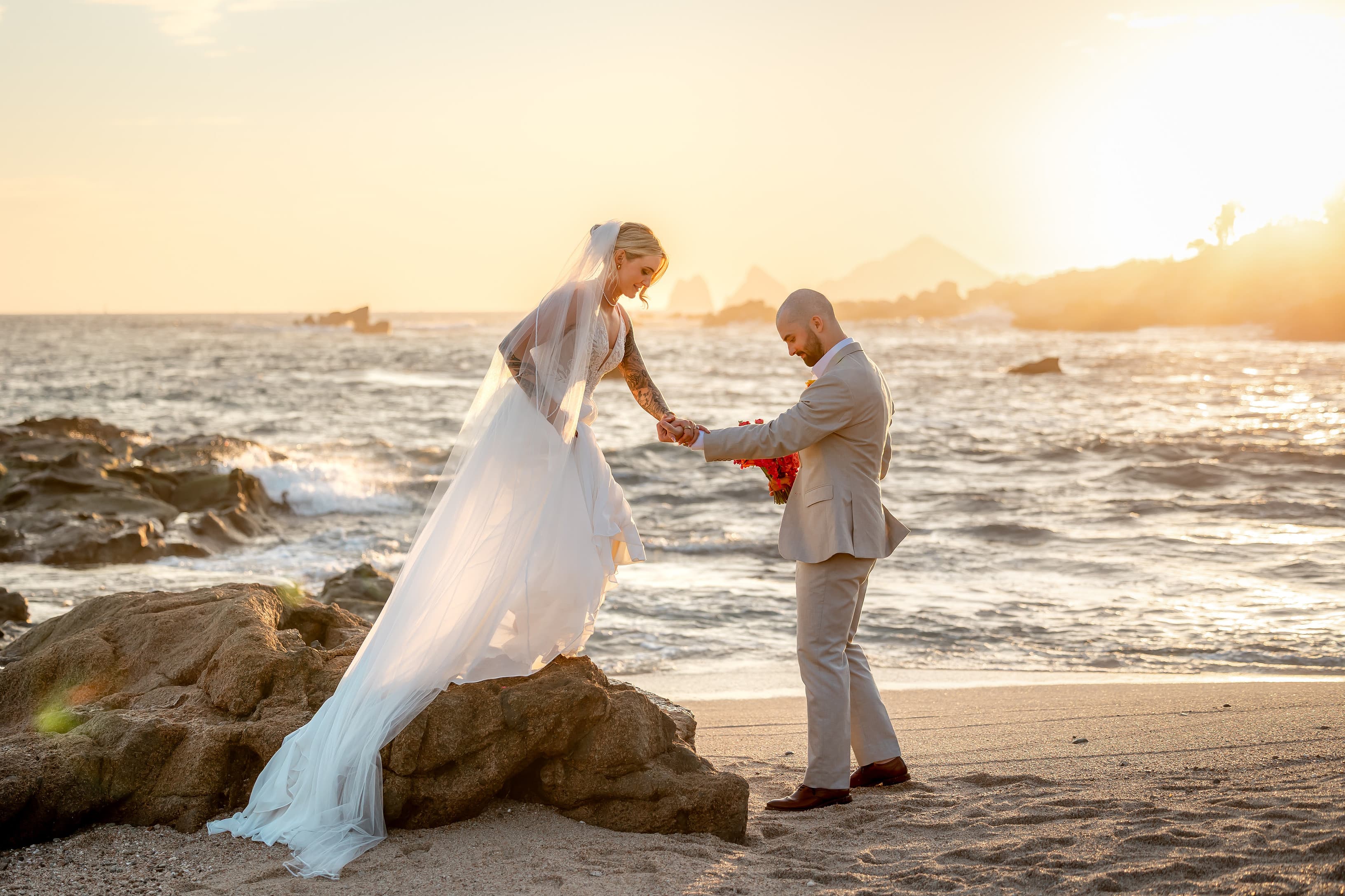
The practical rule photographers working outdoors use is simple: your ceremony should end when golden hour begins, not when it ends.
If your ceremony runs between 25 and 35 minutes—typical for a symbolic ceremony—that gives you a clear starting point:
- Wedding late December: ceremony at 4:35 p.m. Golden hour at 5:07 p.m., couple portraits from 5:10 to 5:45 p.m., cocktail hour underway, dining room entrance around 6:15 p.m. with night falling.
- Wedding mid-January: ceremony at 4:50 p.m. Golden hour at 5:24 p.m. and usable light until 6:20 p.m.
- Wedding in June or July: ceremony at 6:00 p.m. Portraits starting at 6:35 p.m., and you still have room until after 7:20 p.m.
- Wedding in October: ceremony at 4:50 p.m. Golden hour at 5:24 p.m.
Three things will come up and it's worth deciding now:
- The first look. Seeing each other before the ceremony frees up 30 to 45 minutes of portraits you don't have to steal from the celebration. If your wedding is in winter, with light that fades by six, the first look stops being trendy and becomes the practical solution.
- Family portraits. If you're doing photos with grandparents, aunts, uncles, and cousins, make a complete list with names and hand it to your photographer ahead of time. Every group not on that list costs you two to four minutes of golden hour. Ten unplanned groups will eat up your entire window.
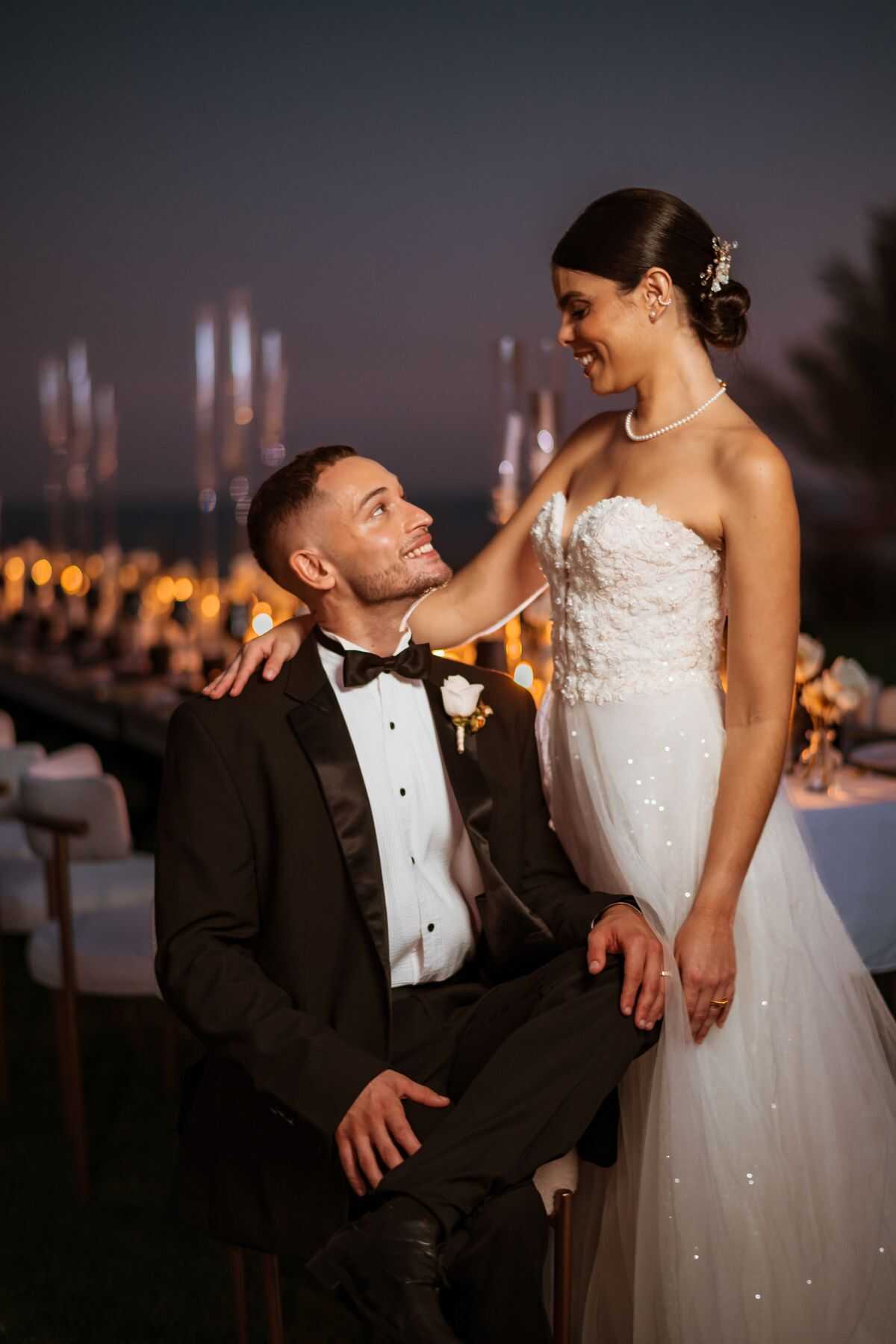
- Nighttime portraits. After usable light ends, any outdoor photo depends on the lighting that's been set up. If your venue has candles and warm light, tell your photographer in advance so they can bring what's needed.
Wind and weather: the two factors almost nobody mentions
In the cooler months, the peninsula typically receives northerly winds coming down the Sea of Cortez. They won't ruin a wedding, but they do change decisions: long loose veils, tall arrangements, lightweight fabrics draping, unprotected candles. Everything behaves differently in wind. Ask directly at your venue how the terrace or beach where you'll be performs in your chosen month. The people running it know from experience.
On the other side of the calendar: the official hurricane season for the northeastern Pacific runs from May 15 through November 30. That doesn't mean you can't marry in those months—plenty of couples do and get spectacular weather—it means you need a real, written Plan B, and cancellation insurance stops being optional.
What your photography quote should say
This is where almost all destination wedding surprises happen. It's not that anyone wants to deceive you: it's that many quotes are written thinking of a local wedding and yours isn't one. Check that these points are written, not just discussed:
- Hours of coverage and from what moment they begin. Do they start when the photographer arrives at the bride's suite or when the ceremony begins? That's a difference of two or three hours.
- Second photographer: included or extra. At weddings where the bride and groom are getting ready in different locations, it's not a luxury—it's the only way to cover both.
- Travel expenses. Flight, accommodation, transfers at destination, meals. If your photographer doesn't live in Los Cabos, this always exists. Let it appear itemized or included, but make sure it appears.
- How many nights they stay. A photographer arriving the morning of the wedding is tired and without margin if their flight gets delayed. The healthy standard is arrival the day before.
- Delivery. Approximate number of edited images, delivery format, timeframe in weeks, and how long the gallery stays available.
- Usage rights. What you can do with the photos and what the photographer can do with them—portfolio, social media, publications. If you're uncomfortable with publication, say it now, not later.
- Backups. Whether they shoot dual card and how they back up material before flying home.
- Venue outside provider fee. Some hotels and venues charge a fee to vendors not on their preferred list. This can end up in your final quote. Ask the venue, not the photographer's quote.
- Weather contingency. What happens if it rains, there's strong wind, or the ceremony moves indoors.
Local photographer or bring your own?
There's no single answer, but there is a criterion.
The local knows the light, the access points, travel times between San José and Cabo San Lucas—which aren't what the map says during peak season—and doesn't add travel expenses to your budget. If your wedding is in winter with a short light window, that familiarity is worth a lot.
Your photographer from home knows you, you've worked with them before or saw their work at a friend's wedding, and that trust matters when you're nervous in your underwear at ten in the morning. If you bring them, give them the timeline with the hours above and ask them to arrive a day early to see the location in daylight.
What's non-negotiable in both cases: ask to see a complete wedding from start to finish, not the portfolio's greatest hits. Everyone has twenty incredible photos. What you want to know is what hour eight looks like, when it's already dark, everyone's dancing, and the light is gone.
How this is solved at katiblé
Organizing a destination wedding from another city means sending messages to vendors you don't know and waiting days for an answer. That's the exact point where katiblé changes the equation.
Your wedding lives within the platform: you send one request with your date, your venue, and your ceremony time, and the professionals working in Los Cabos respond in minutes, not days. The invitation for you is free. And with each vendor you contract through the platform you receive cashback: part of what you spend comes back to you. With enough vendors contracted there, your wedding starts to pay for itself.
What time should my ceremony start in Los Cabos?
It depends on the month. The rule is your ceremony should end when golden hour begins. In December and January that means starting between 4:35 and 4:55 p.m.; in June and July you can start as late as 6:00 p.m. Check the times table above for your exact date and subtract your ceremony length.
How long is golden hour in Los Cabos?
Between 44 and 48 minutes, depending on the time of year. It's longer near the solstices—June and December, about 48 minutes—and shorter near the equinoxes—March and October, about 44 minutes. It's a real and brief window: if family portraits run long, you'll lose it entirely.
Do I need to hire a second photographer?
If you and your partner are getting ready in different locations, yes: it's the only way to capture both stories. If you're getting ready at the same hotel and the wedding is intimate, a single photographer with good time management can cover it. Ask what they recommend for your specific wedding size and format, and have that answer put in your contract.
Should I get married in Los Cabos during hurricane season?
Many couples do and get perfect weather, plus better accommodation rates. What you shouldn't do is go unprotected: get cancellation insurance, choose a venue with a confirmed indoor option in writing, and review each vendor's rescheduling policies before signing. The official season runs from May 15 through November 30.
Can I ask my photographer for nighttime beach photos?
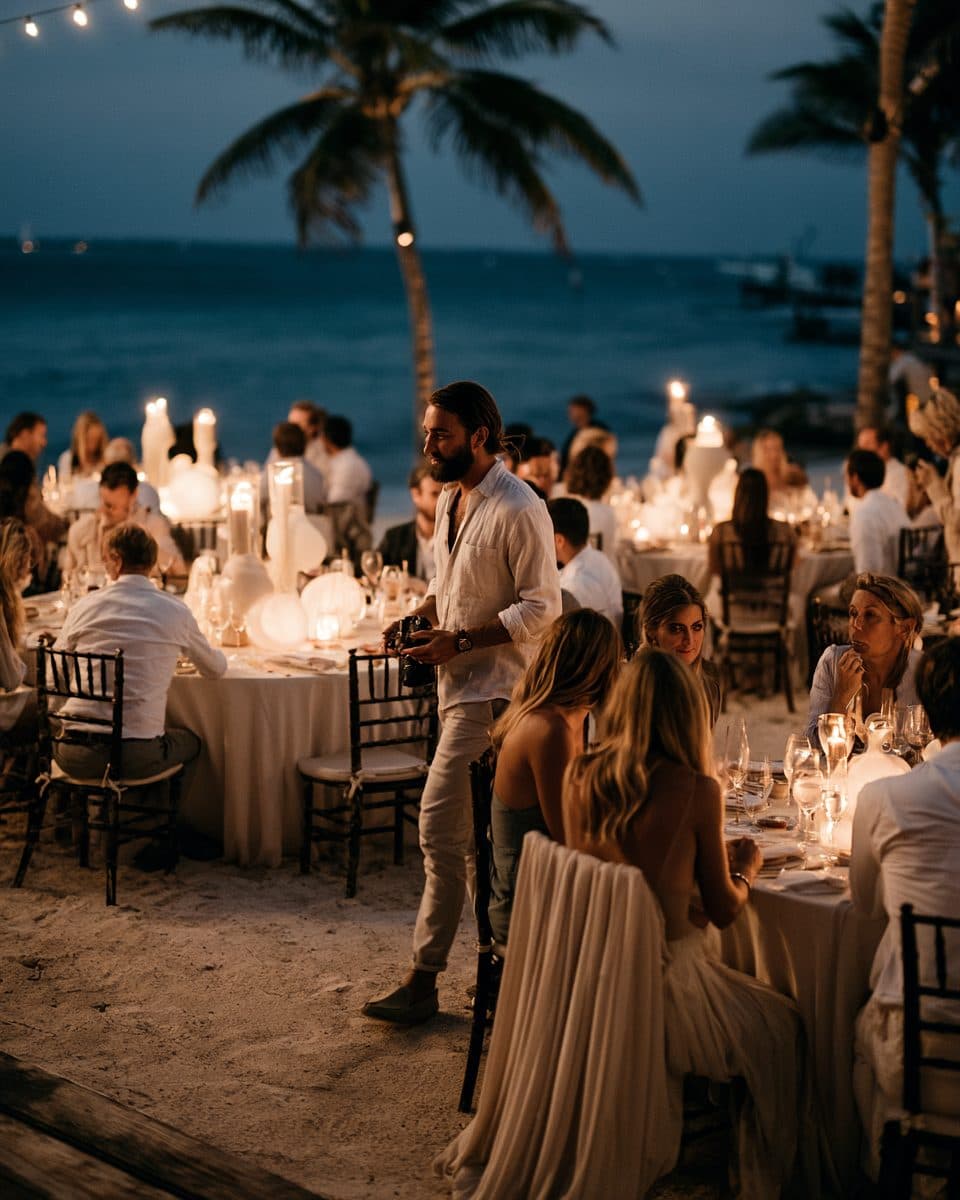
Yes, but it requires planning. After usable light ends—between 6:00 and 7:30 p.m. depending on the month—any outdoor photo depends on artificial lighting. Agree to it in the quote so they bring the right equipment and build ten minutes into your timeline to leave the reception and return.
Schedules solve the timeline; for choosing the right person, ask for more than just the portfolio.