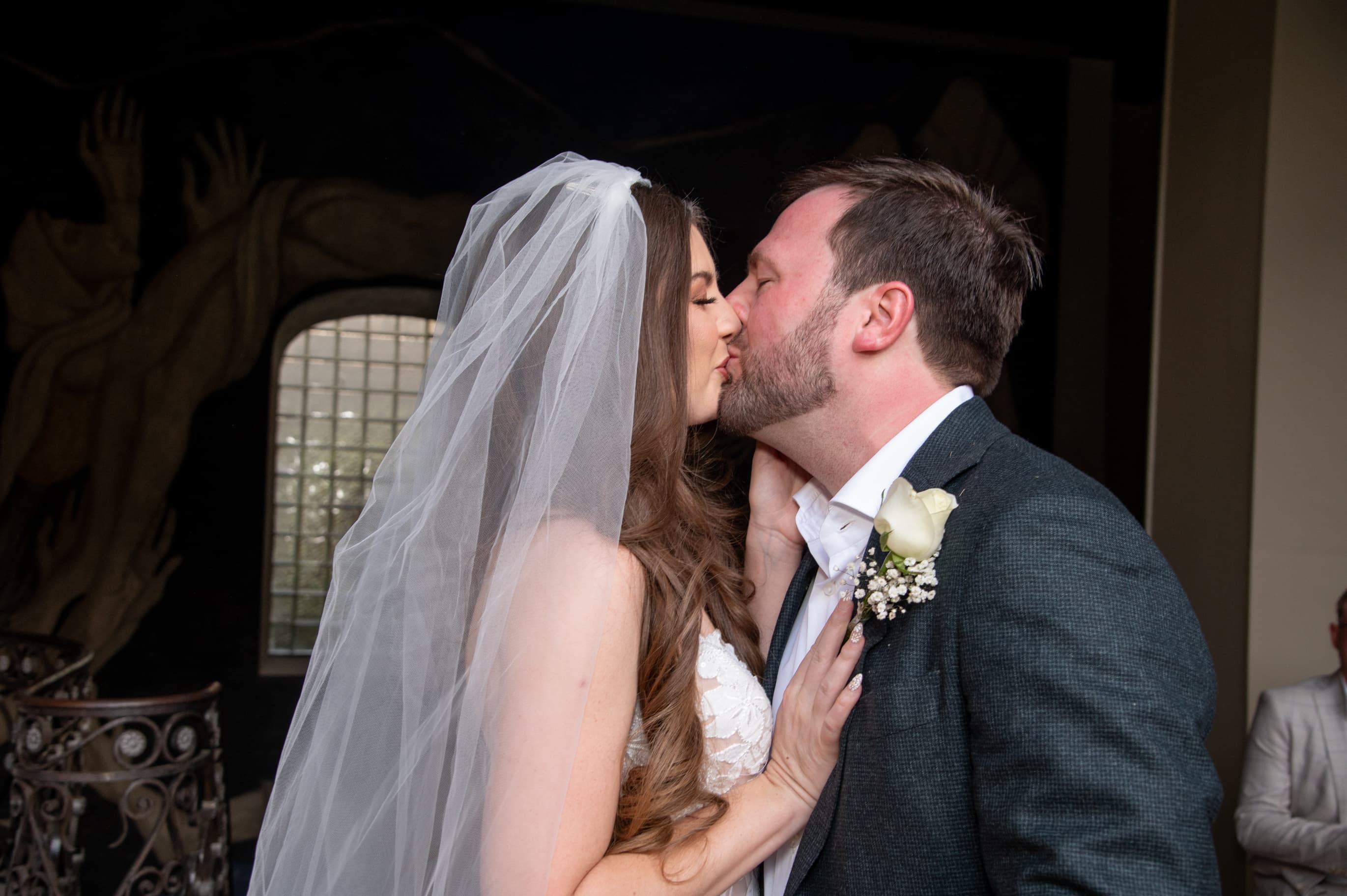
You ask him about the flowers: "Whatever you want, darling." About the menu: "Whatever you want." About the music, timing, guest count: "You know more about that."
It sounds like trust. By the tenth time, it sounds like you're planning a party alone—one where he also happens to be getting married.
The Short Answer
"Whatever you want" can be genuine support or a very polite way of opting out. The difference isn't in the phrase itself—it's in what happens next. If he actually decides on certain topics, shows up when complications arise, and handles the financial part you agreed upon, that's trust. If all the work, pressure, and difficult decisions land on you, that's not support: that's delegating with affection. The solution isn't for him to have an opinion on everything, but to divide complete decision-making areas.
The Most Generous Phrase That Costs Nothing
"Whatever you want" has a trick: it sounds like a gift, but it doesn't cost the person who says it anything. He doesn't research, doesn't get quotes, doesn't argue with your aunt about the guest list. He just agrees. And somehow he comes across as the most laid-back groom in the world.
Meanwhile, you're carrying the invisible load: remembering payment deadlines, comparing three catering quotes, deciding whether that cousin who never calls actually makes the cut. That's called mental labor, and it doesn't show up in a single wedding photo.
He gave you absolute freedom. You got absolute work. What an equitable arrangement.
Why It Happens So Often
In many families—not all—the wedding is still treated as the bride's project. People ask her about the dress, the date, the venue. Him, if they're lucky, about his suit and bachelor party. Nobody signed a contract, but the division was already there.
So when he says "whatever you want," often he's not being lazy on purpose. He's repeating what he learned: that this territory is yours and that having an opinion would be overstepping. You, who learned the same thing, end up deciding hundreds of small things nobody notices that keep piling up.
The problem isn't that he doesn't care about napkin colors. Almost nobody cares about napkin colors. The problem is that "whatever you want" also applies to things that should matter to him: how much you're spending, who gets invited, what contracts get signed.
How to Tell Support From Indifference
The phrase is the same. What changes are three things.
Does he actually decide anything? If there are at least a couple of areas where he researches, compares quotes, and makes choices—music, beverages, transportation, anything—then there's a real division of labor. If everything goes through you, there's no division: there's an assistant who nods along.
Does he show up when things go wrong? Real support shows up in a crisis: when a vendor cancels, when family pressure mounts over the guest list, when someone has to say no. If his answer is still "whatever you decide," that's not confidence in your judgment. That's sending you into battle alone.
Does he know what's already booked? Ask him how much deposit has been paid and to whom. If he has no idea, the wedding isn't the two of you's yet. It's yours, and he's an invited guest.
| Signal | Probably Support | Probably Indifference |
|---|---|---|
| His own decisions | Takes charge of a couple of complete topics | Everything goes through you |
| Crisis moments | Shows up with vendors and family | "Whatever you decide" |
| Money | Knows what's been paid and to whom | Has no idea |
| Time | Sets aside hours for wedding planning | Only shows up to sign |
What Also Doesn't Work
Asking him to have an opinion on everything. If you send him forty photos of centerpieces and get upset when he responds with a thumbs-up, the problem isn't just him: you're asking him to fake interest in something he doesn't care about. And forced enthusiasm produces exactly that: thumbs-ups.
It also doesn't help to give him random tasks like "call the DJ." A task without decision-making power is a messenger job. What changes the dynamic is giving him a complete topic—with budget and deadline—and accepting what he decides even if it's not what you would have chosen.
That last part is the hard part. If you correct every decision he makes, he learns very quickly that deciding is pointless. And back he goes, completely calm, to "whatever you want."
The Verdict
In our view, "whatever you want, darling" isn't proof of love or indifference. It's a phrase that, repeated without changing anything, leaves one person organizing alone something that involves two.
If he truly trusts your judgment, let him prove it by taking responsibility for part of it. Trusting someone isn't handing them everything; it's being able to let go of something because you know the other person will hold it up. Anything else isn't trust. It's convenience with good manners.
Next Steps
Sit down today with the list of everything still to do and divide it into complete topics, not isolated tasks:
- Each of you chooses the topics that genuinely interest you.
- The ones nobody wants get divided equally, with deadlines.
- Whoever takes a topic decides within the agreed budget, and the other doesn't interfere unless the budget is exceeded.
A good place to start is the order in which to book your vendors: they're major decisions, with timelines, easy to divide. And if the workload is too much for both of you, maybe the real question is whether you need a wedding planner. To estimate what each person should handle, Katiblé can tell you what you need and send proposals.
Frequently Asked Questions
Is it normal for the groom not to be involved in wedding planning?
It happens often, especially where weddings are still seen as the bride's territory. That it happens often doesn't make it fair: if all the burden falls on one person, it's worth talking about before it turns into resentment.
How do I get my fiancé to participate without it turning into a fight?
Don't ask him to have opinions on everything. Give him complete topics—music or transportation, for example—with budget and deadline, and respect what he decides. Participation grows when decisions are truly his.
Does "whatever you want" mean he doesn't care about the wedding?
Not necessarily. It could mean he trusts your judgment or thinks offering an opinion would be overstepping. You can tell by his actions: if he decides on something, shows up for problems, and knows what's been paid, he cares.
What decisions should the two of you make together?
The ones with long-term consequences: total budget, guest list, venue and date, and any contracts requiring deposits. Aesthetic details can be divided; those four can't.
What if I like deciding everything?
Then say so and take on the full burden willingly. The problem isn't that one person decides a lot—it's doing it without choosing to and ending up resenting it.
Calculate how much your wedding gives back
Estimate the cashback your wedding could generate once it is enabled: your guests book hotels, transfers and experiences. It is not enabled yet.
For vendorsGet listed in the Katiblé catalogue
We don't send you fake leads — we send the ones who actually book. Your clients plan their events here and find you.