Wedding Lighting in Mexico: The Budget Line Almost Nobody Plans For
You chose the venue on a Tuesday at noon. You went to see it in daylight, you saw the arches, the garden, the fountain, and you said yes. You were right: it's stunning.
The problem is that your wedding won't happen at noon.
In Mexico, the sun sets between six and seven-thirty in the evening, depending on the month, and after that, that beautiful garden ceases to exist. What remains in its place depends entirely on a decision that almost no one makes on time: lighting.
It's the most underestimated line item in a destination wedding. It doesn't appear in mood boards, it's rarely included in the venue rental, and it's the only thing capable of making an eighteenth-century hacienda look like an eighteenth-century hacienda—or like a multipurpose hall with expensive flowers.
Let's organize this.
Why Your Venue Looks Different at Nine at Night
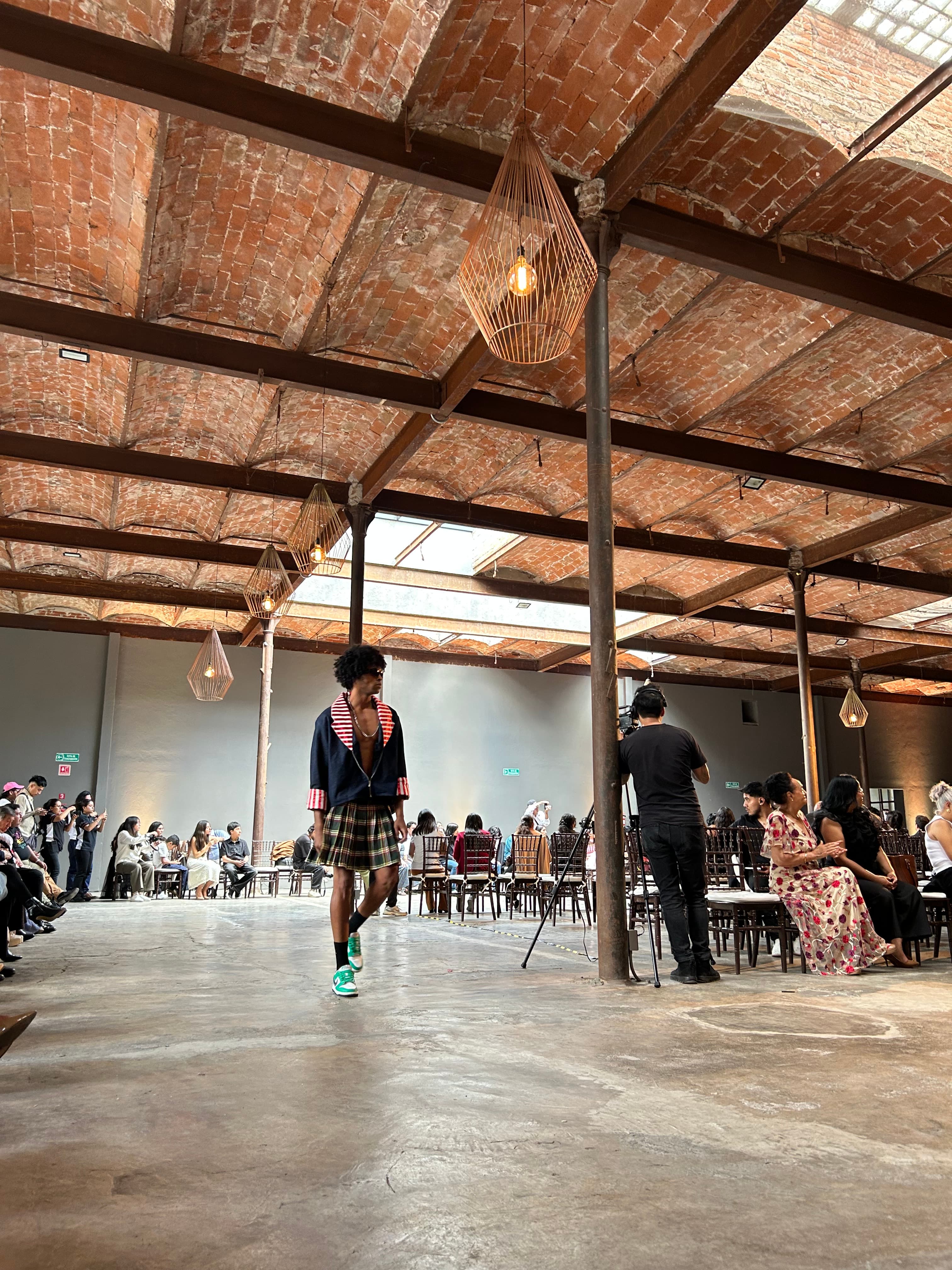
The spaces most rented for a destination wedding in Mexico—haciendas, colonial houses, gardens, terraces, cenotes, beaches—have something in common: they were not built to be illuminated at night.
A hacienda has service lights in the hallways and perhaps some luminaries on the facade. A garden has, if you're lucky, pathway lighting. A cenote has nothing. It's not a flaw in the venue: the original electrical installation was designed to let you walk without tripping, not to host an event of 120 people with a banquet, dance floor, and photographer.
When night falls, three things happen at the same time:
- The space loses its architecture. The arches, the cantera walls, the trees, and the fountain that made you fall in love become a single dark mass. You paid for a place with character, and at nine in the evening that character is invisible.
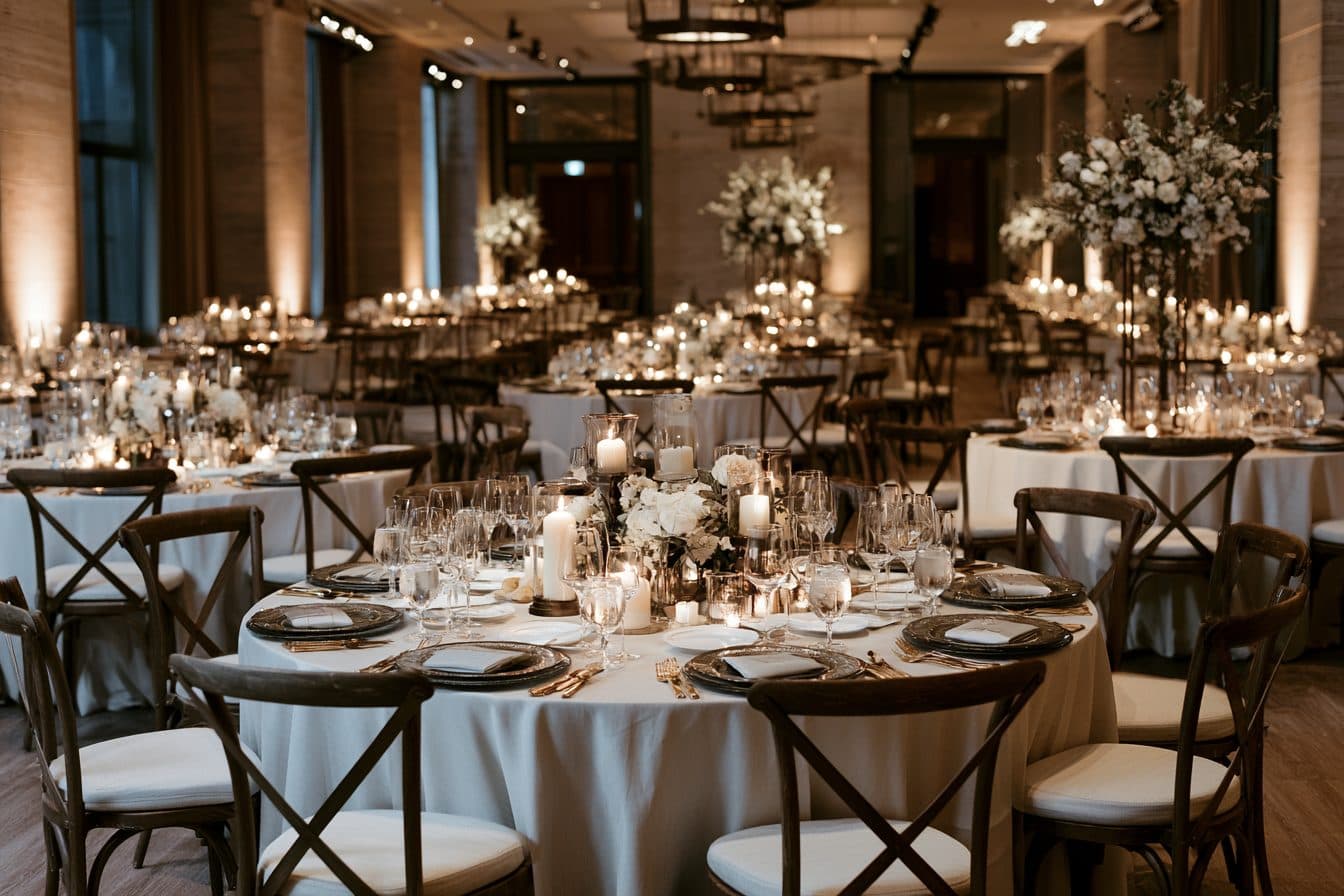
- The tables lose their presence. People dine in semi-darkness, stop looking at each other, and conversation fades along with the light. The energy of a wedding is, in large measure, a matter of photons.
- Photography becomes complicated. Your photographer can work with low light, but not with no light. If you hired someone good and left them without light, you hired someone good for nothing.
What the Venue Rental Almost Never Includes
Before we talk about aesthetics, we need to talk about the contract. If you review our guides to venues in Querétaro or wedding budget, you'll see the same pattern repeated: the venue rental usually covers hours of use, basic furniture, simple linens, kitchen, and parking.
What it almost never covers: catering, bar, audio, and lighting.
And here's the nuance that confuses almost everyone. Many venues say "yes, we have lighting" and it's true: they have the light already installed. That's safety lighting, not lighting design. They're different things and quoted differently.
Ask it this way, with these exact words, during your site visit:
- What luminaries stay on during the event and which ones turn off?
- Is the installed light warm or cool? Can it be dimmed?
- How much electrical load do I have available, and at what points on the property?
- Have you installed event lighting here before? With whom?
The fourth question is gold. A venue that has worked with lighting teams before knows exactly where the electrical panels are and what they can handle.
The Four Layers of Light at a Wedding
Good lighting is not "putting up lights." It's four distinct jobs that require different equipment. If you understand the layers, you can read any quote.
1. Ambient Light
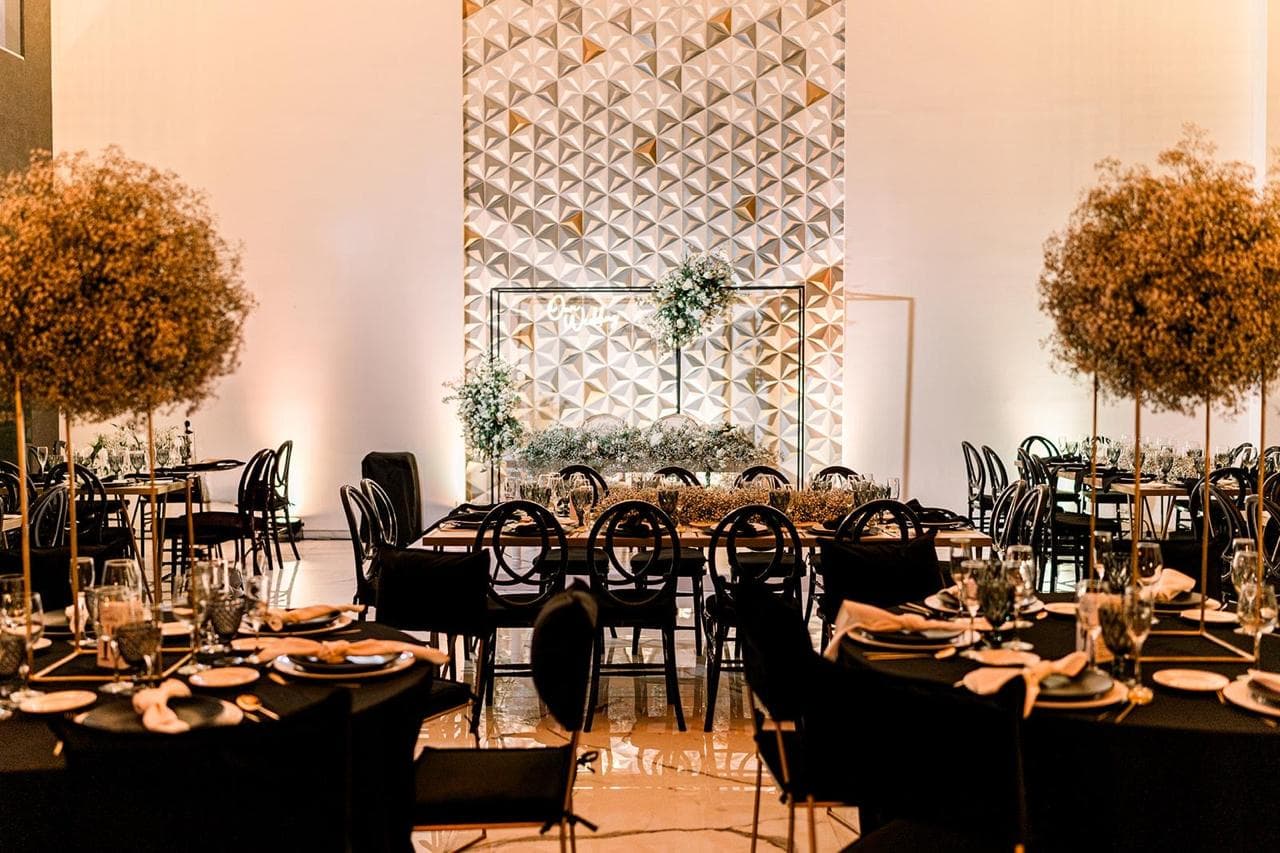
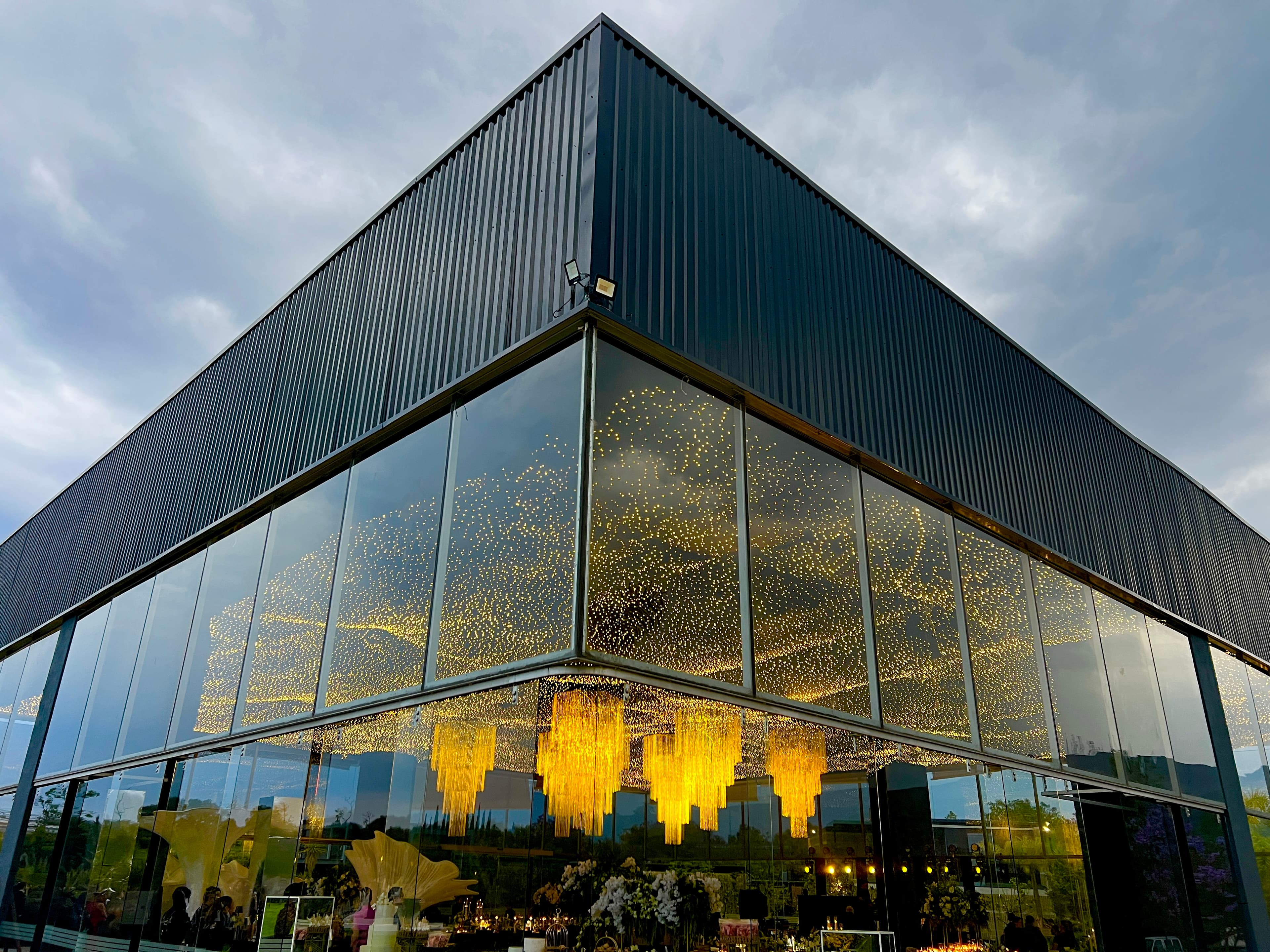
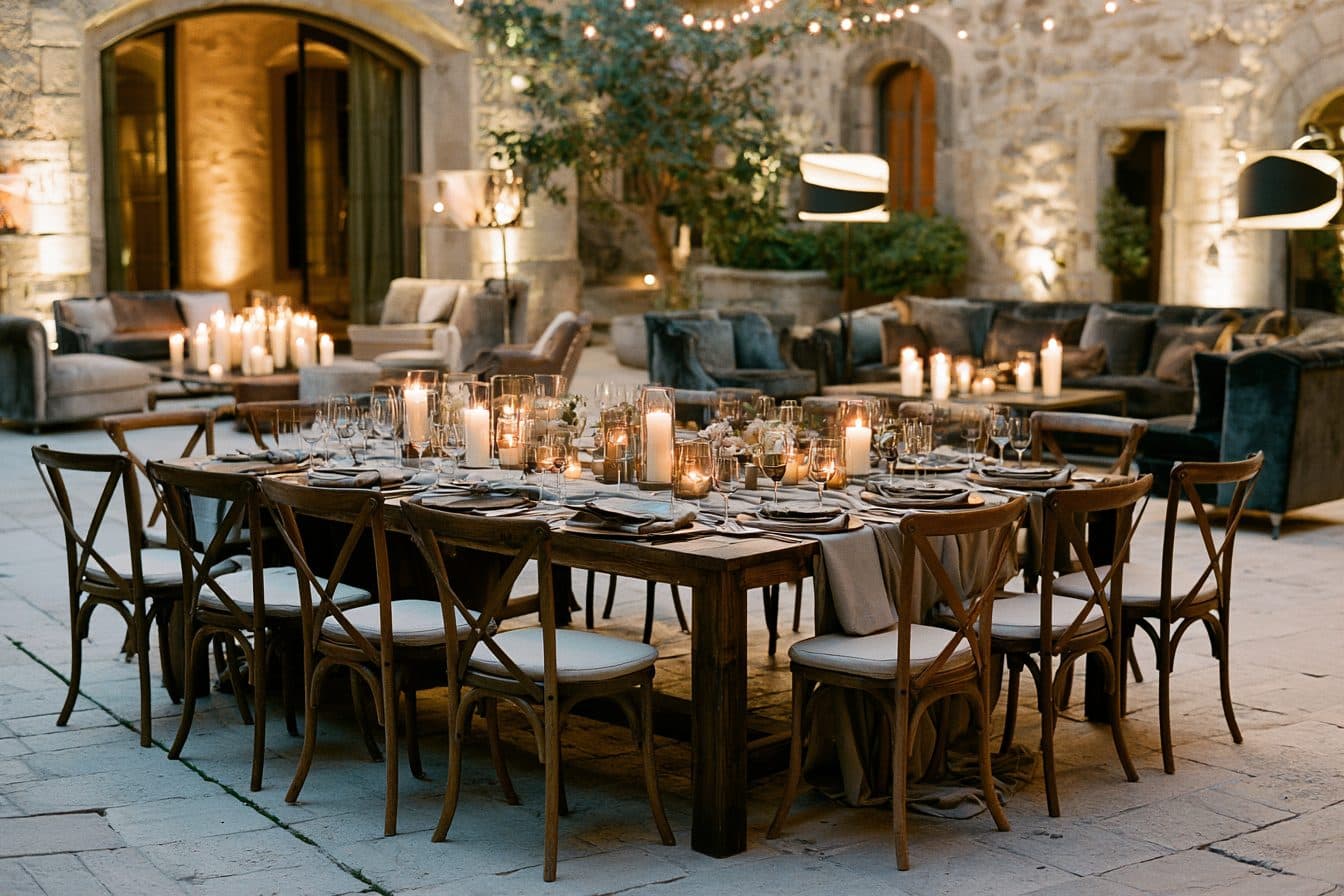
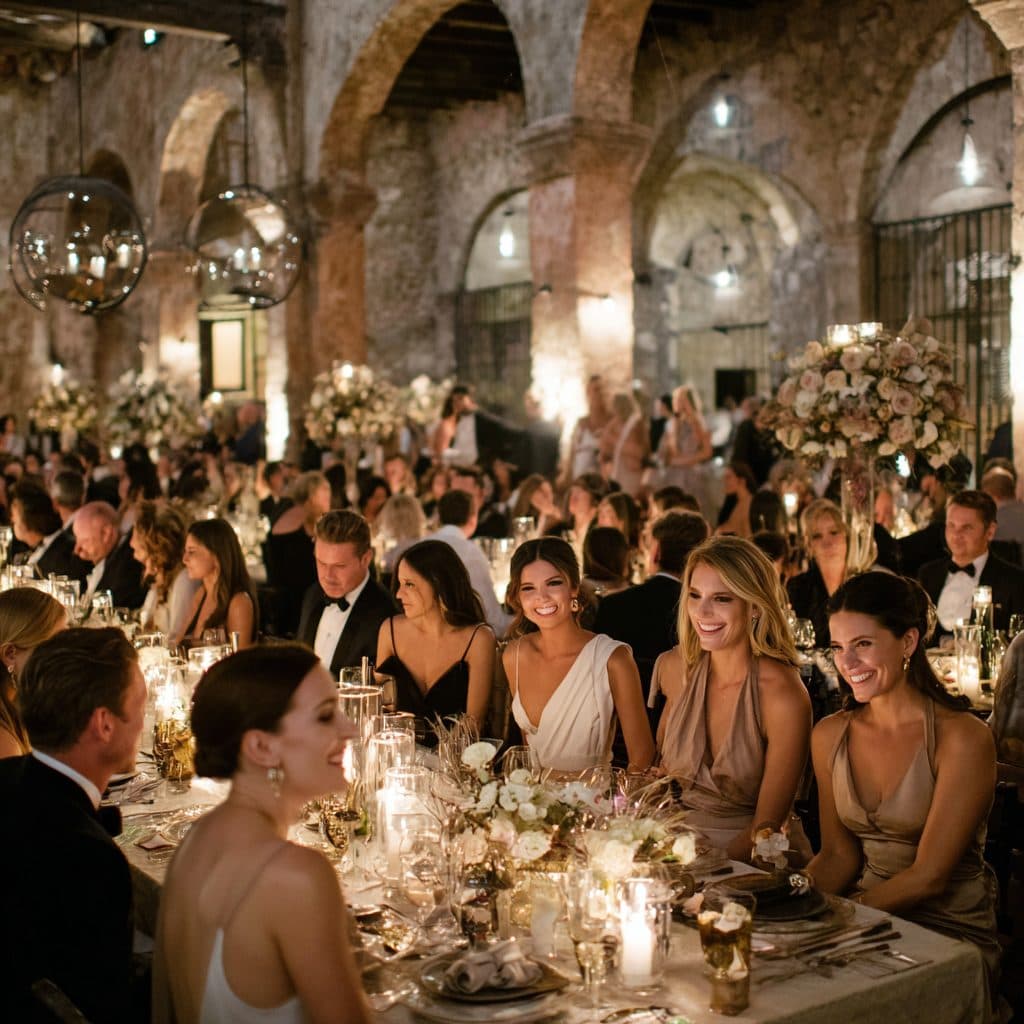
This is what defines the general tone of the place. It's usually achieved with hanging luminaries, lanterns, pillar candles in volume, and warm-colored light spheres distributed throughout the space. Its job isn't for you to see: it's for the place to *feel* a certain way.
The rule that almost never fails: warm and low. Amber light, close to the temperature of a candle, placed at eye level, not from the ceiling. Overhead white light is what turns a hacienda into a boardroom.
2. Functional Light
The light people need to not trip and to pour a drink without fumbling: entryways, stairs, level changes, path to the bathroom, bar, gift table, service area. This is the invisible layer. No one praises it, but everyone notices when it's missing.
In haciendas and gardens, it's also a matter of actual safety: uneven pavement, tree roots, stairs without contrast. It's worth walking the complete guest journey at night, before you decide.
3. Architectural Light
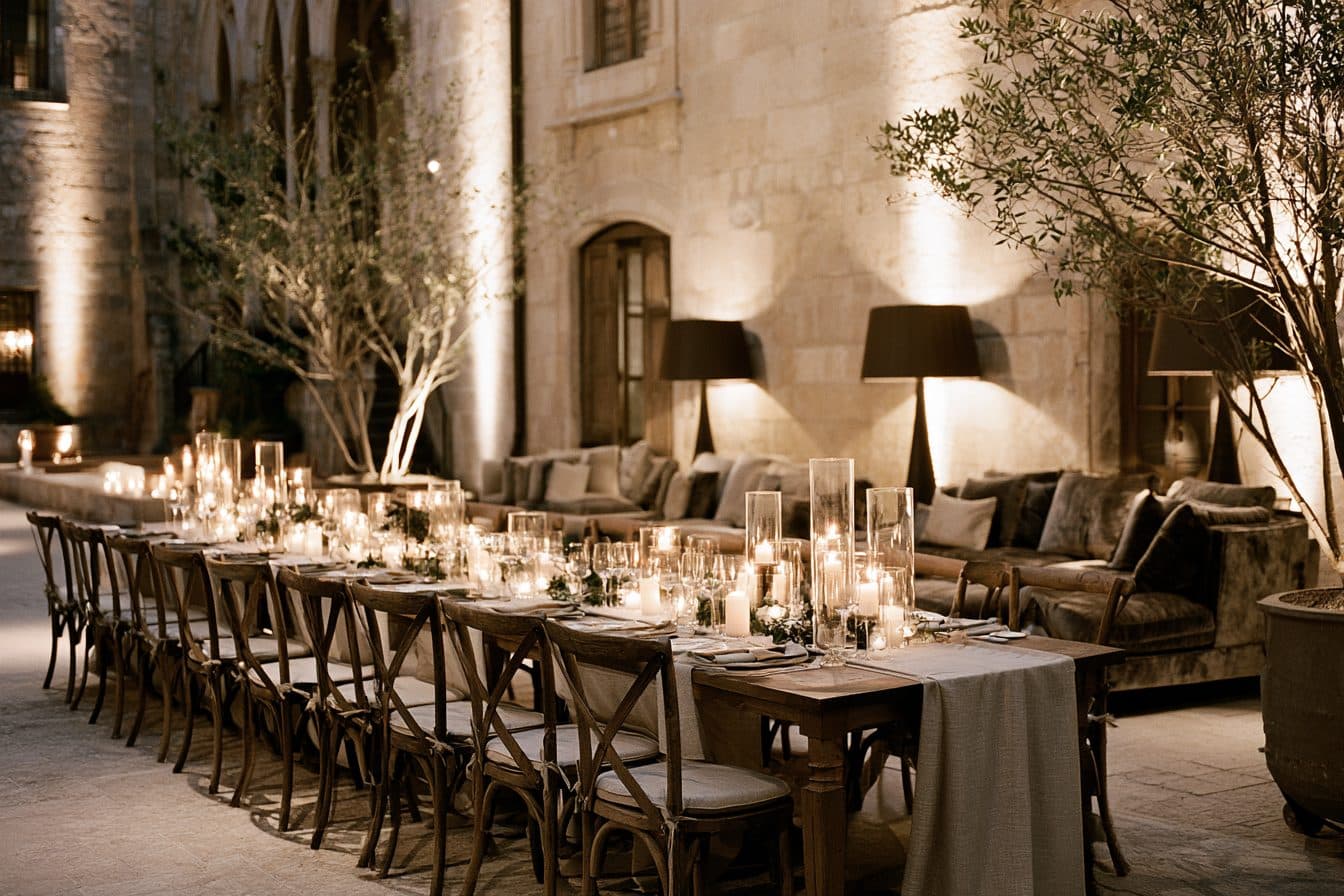
This is what returns the place you bought. It's achieved by lighting upward from the ground the elements that give the space character: cantera walls, arches, columns, the canopy of trees, the facade, an aqueduct, a chapel.
It's by far the layer with the best return on investment. A garden with trees lit from below looks like a different garden. Literally, you're paying to see again what you already paid for.
4. Dance Floor Light
This is the only layer where cool white and movement actually work, because the dance floor is the only moment where the wedding stops being a dinner and becomes a show. It usually comes from the audio provider or production, not the ambient lighting designer, and that intersection is a classic source of gaps: everyone assumes the other person is bringing it.
Put in writing who's delivering the dance floor lighting.
The Topic No One Talks About: Power
You can have the best lighting design of your life and not turn it on, because the site doesn't have the electrical capacity.
A hacienda or garden wedding concentrates, in just a few hours and in very few points, all of this at once: kitchen, bar refrigeration, audio, lighting, and video infrastructure. Many heritage or rural spaces simply don't have the installed capacity to sustain it, and the standard solution in Mexico is to rent a power generator.
Three things worth knowing before someone mentions it for the first time three weeks before your wedding:
- The generator is quoted separately, and it's usually not in the lighting proposal or in the venue's proposal. It typically appears as "production" responsibility, which is the industry's word for "someone else's problem."
- Request a silent or soundproofed generator and define where it's placed. A noisy generator next to the ceremony ruins both the audio and lighting at the same time.
- You need backup, not just capacity. Ask what happens if the generator fails mid-event and who's on-site to fix it.
This is the point that separates a wedding that looks good from a wedding that actually works. If you hire a wedding planner, electrical coordination is exactly the kind of thing you're paying them for.
How to Read a Lighting Quote
You won't find a reliable public price range for wedding lighting in Mexico, and be suspicious of anyone who gives you one without seeing the venue. It's quoted per project, because it depends on the size of the property, the distance between points, the height of the trees, how much cabling needs to be run, and how many hours the setup takes.
What you can do—and it's more useful than an average—is demand that all your quotes be itemized the same way so you can actually compare them:
- Equipment, by type and quantity. Not "decorative lighting": how many luminaries, what type, in what zone.
- Setup and breakdown, with times. Breakdown is usually at dawn and sometimes charged separately.
- On-site personnel during the event. Does someone stay to operate, or do they install and leave?
- Cabling, distribution, and protections.
- Power generator, included or excluded, stated in those exact words.
- Rain contingency plan. What happens to outdoor equipment if it rains.
When three providers quote you with this same breakdown, price differences stop being a mystery and become a decision.
Beyond String Lights
String lights are the default resource of the last decade and they work: they're warm, economical, and cover a lot of surface area. The problem isn't that they look bad—it's that they look the same. Your Bajío hacienda and a garden anywhere else in the world end up with the same photograph.
If you want your wedding to look like yours, the route is usually different: less cable crossing the sky and more volume of pillar candles on tables and walls, light spheres at different heights, and light from the ground on architecture and trees. It creates depth instead of a ceiling of points, and it photographs much better.
It's the same logic we apply when choosing hacienda decoration: the place is already the protagonist, and the job of design is to underscore it, not cover it up.
When Lighting Gets Decided
Late. Almost always late, and that's why it almost always costs more.
The order that actually works:
- When you sign the venue: ask about electrical capacity and what light stays on. Before signing, not after.
- When you lock in the ceremony time: lighting depends on what time sunset happens that day in that location. Our guide to light and timing for photography explains how those decisions chain together.
- Six to eight months before: visit the venue at night, at the actual time of your event. It's the visit nobody makes and the one that saves the most money.
- Together with decoration, not after: flowers and lighting are designed in the same conversation. Lighting a expensive arrangement poorly is the quietest way to waste budget.
- Lighting test, if the venue allows. Even partial, even just an hour.
Frequently Asked Questions
Is lighting included in the venue rental?
Almost never. What is usually included is the venue's existing installed lighting—hallways, facade, pathways—that lets you circulate safely but doesn't give character to the space or let your photographer work. Event lighting design is contracted separately and quoted per project. Request it in writing in the venue contract, with the exact list of what stays on during the event.
Do I need a power generator for a hacienda or garden wedding?
It depends on the venue's installed electrical capacity and how much equipment you'll be connecting between kitchen, bar, audio, and lighting. Many rural haciendas and gardens don't have sufficient capacity and the generator becomes essential. Ask during your first visit, not at the end: it's a line item quoted separately that appears late in most budgets. If you need one, request a soundproofed unit and define from the start where it's placed.
What's more important: lighting the architecture or the tables?
If you have to choose, the architecture. Lighting from the ground upward on walls, arches, and trees is what returns the place you paid for and what most changes the perception of the complete space. Tables are resolved quite well with volume of pillar candles, which also provides flattering warm light. Ideally you'd have both layers, but that's the priority order.
When should I book the lighting?
Ideally at the same time as decoration, six to eight months before, and always after confirming the ceremony time and the venue's electrical capacity. Booking it at the last minute is what drives up costs: setup times get compressed, options reduce, and the power generator appears as a last-minute surprise.
Can I light a wedding with candles only?
You can, and it looks beautiful, but you need far more volume than you imagine, and you still need functional light on entryways, stairs, and service areas for safety. Also, many venues have restrictions on open flame, especially in heritage spaces and under tents. Confirm this in writing before you build your entire concept around candles.
---
Lighting is the line item most people discover late and the one that changes the result the most. If you're assembling your vendor team for a destination wedding in Mexico, at katiblé you can bring together in one place those who will handle lighting, decoration, and production, and have them talking to each other from the beginning—which is, after all, what it's all about.