Destination Wedding Venues in Riviera Maya: How to Choose the Right One
Choosing a venue in Riviera Maya isn't about selecting the most beautiful location in your folder. It's about choosing the place that can handle your date, your guest count, and the three things nobody tells you until you've already signed: the sargassum, what time the music stops, and who's allowed to work there.
This guide is designed so you arrive at that conversation knowing exactly what to ask. There's no "best" venue in Riviera Maya. There's one that fits your wedding and several that don't, and the difference between them is almost never about the list price.
And if you don't yet have your budget, Katiblé's budget calculator will estimate it with your guest count and destination — free and in one minute.
The five types of venue you'll find
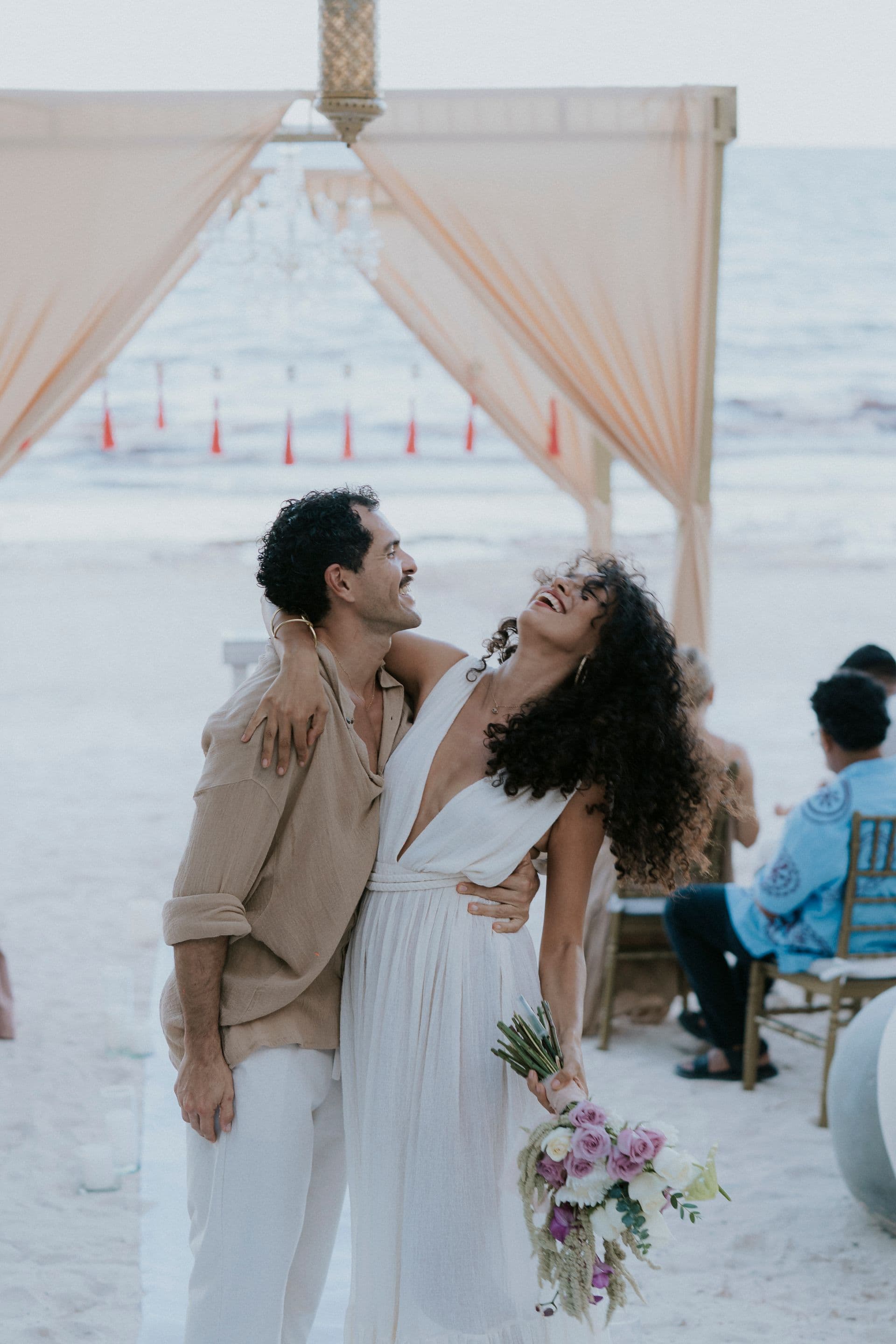
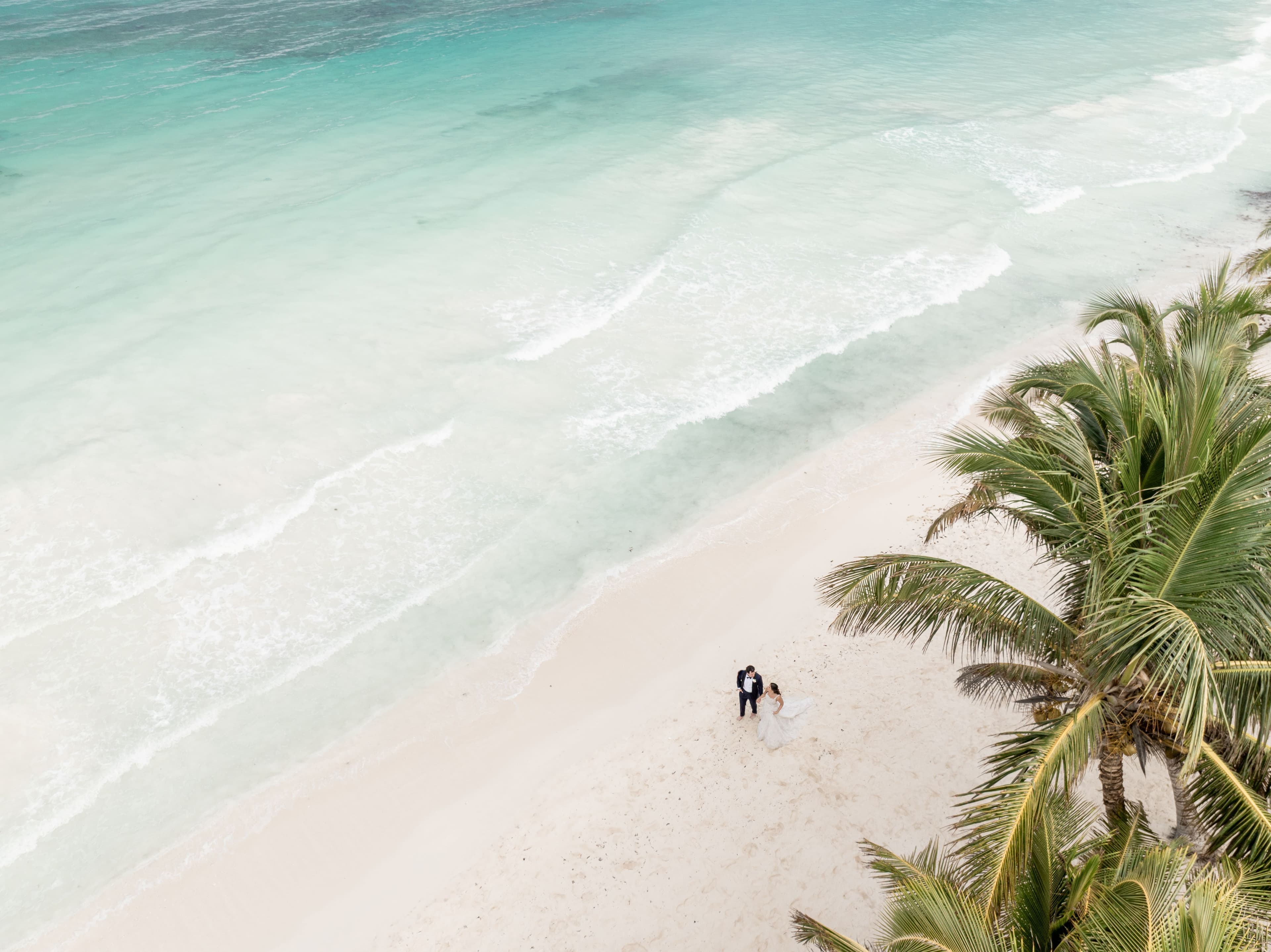
The Riviera Maya coastline isn't a single place. It changes texture every twenty minutes of driving, and with it changes the kind of wedding you can create.
Resort with dedicated wedding area. The most common option and the most predictable. They have their own coordinator, set menus, a covered Plan B, and lodging for your guests on-site. In exchange, they almost always maintain a closed list of approved vendors: photographer, music, florals, setup. If you already have someone outside in mind, that's the first question to ask—before price.
Private beachfront villa. You rent the entire house for several days. You gain total privacy, control over who works there, and the possibility of stretching the wedding into three days instead of one night. You lose infrastructure: bathrooms for 120 people, industrial kitchen, generator, parking. All of that gets rented separately and adds up. A villa is never "just the villa rental."
Beach club. The middle ground. They already have kitchen, bathrooms, bar and staff, and tend to be more flexible with outside vendors than a resort. The downside: they're public businesses. Ask explicitly if they close to the public on your wedding day and at what time, because "partial privatization" means people in swimwear in the background of your photos.
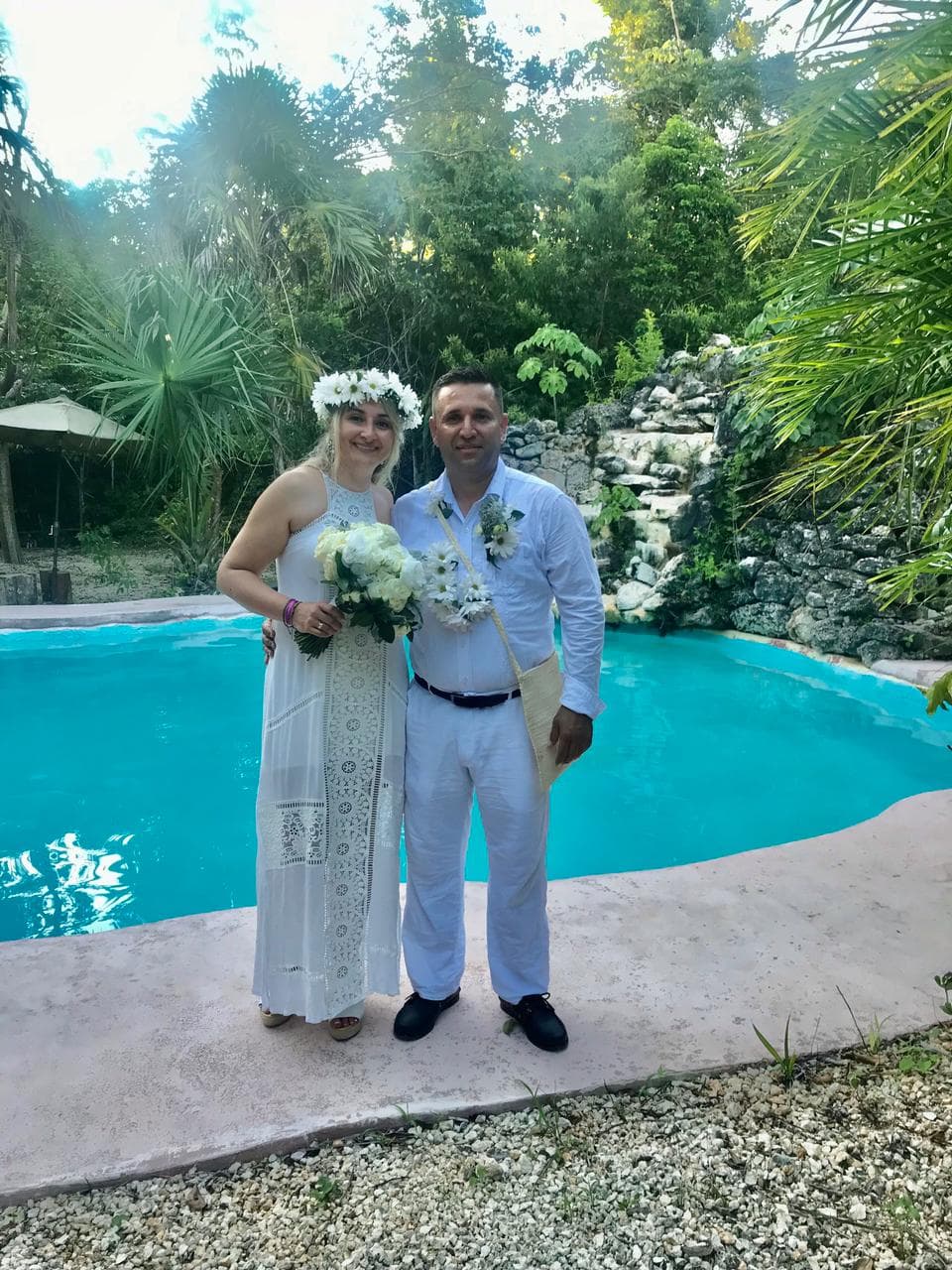
Cenote and jungle. Visually unmatched by anything else. Operationally it's the most demanding: many cenotes sit on ejidal land or protected areas, with capacity limits, amplified sound restrictions, prohibitions on certain skincare products if guests will be in the water, and access routes that a setup truck can't always take. It can be done and it's stunning, but you need a team that's already worked there specifically.
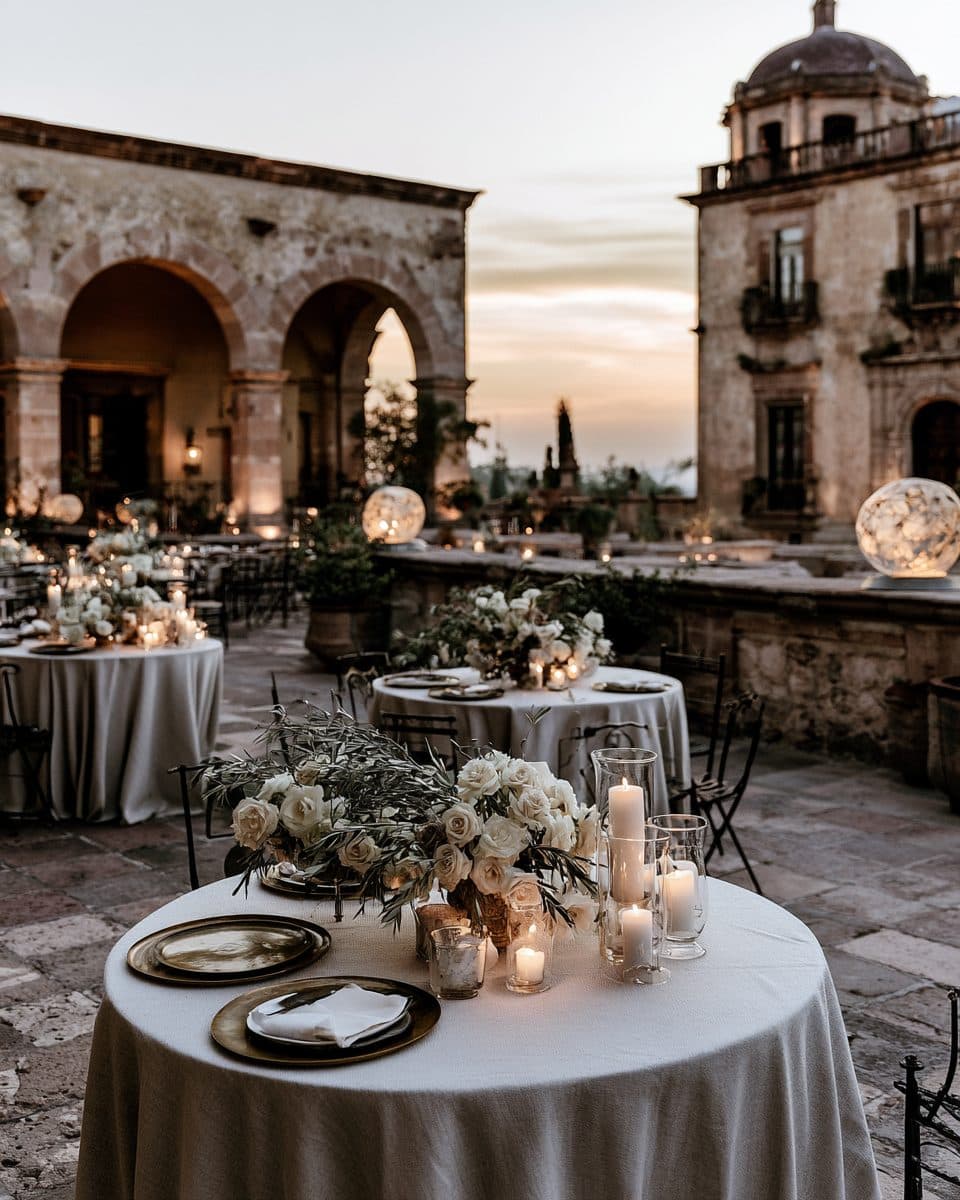
Hacienda or inland farm. Twenty or forty minutes inland from the coast, the landscape shifts, the per-person cost drops, and the sargassum problem disappears. You lose the ocean backdrop and gain roof coverage, shade, and space. If your guest list grew larger than expected, this is often the solution.
The question that organizes everything else
Before comparing venues, define one thing: Is the ceremony in open sand or under a roof?
Everything else arranges itself around that answer. Open sand means you depend on the weather, the state of the beach that day, and a specific hour of daylight. Roof, covered terrace, or palapa means you can let go of that anxiety, but the open air facing the ocean was probably why you wanted to get married here in the first place.
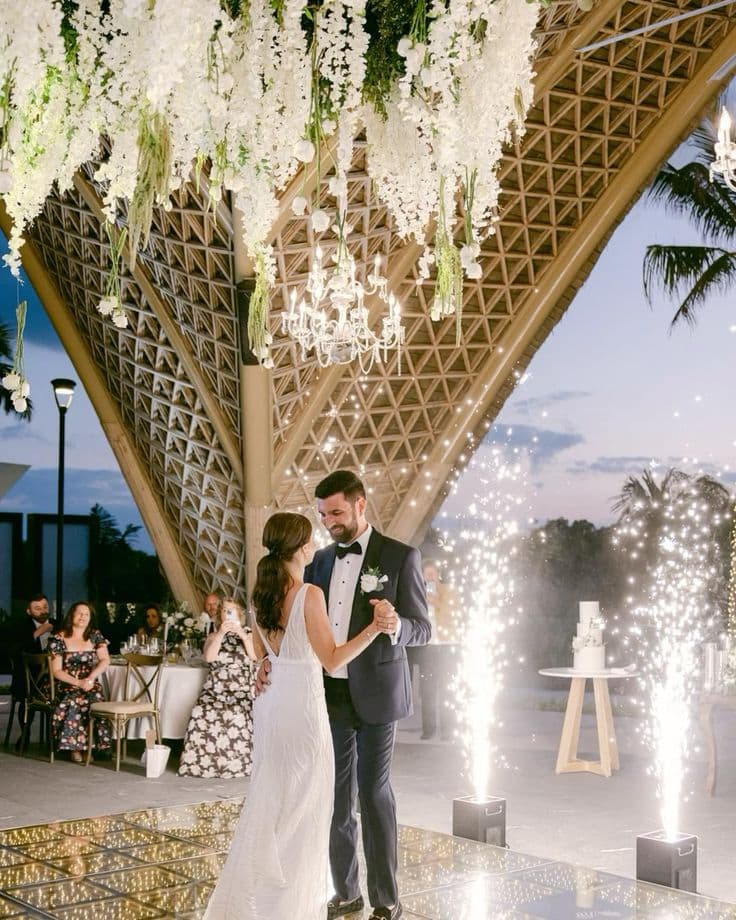
The honest answer for most couples is something in between: ceremony in sand, reception under structure. If that's your choice, your venue needs to have both spaces on the same property, and the transition between them needs to be walkable in heels. It sounds obvious. It's not: there are venues where the ceremony point and reception point are separated by three hundred meters of loose sand.
The real calendar: sargassum, rainfall, and high season
This is where most guides fall short, so let's get concrete.
Dry season with best weather: December through April. It's also the most expensive season and the one that books up first. If your date falls here, you're competing for the same weekends as everyone else.
Atlantic hurricane season: June 1 through November 30, with statistically highest activity between August and October. It doesn't mean there will be a hurricane at your wedding. It means if you're getting married in September, you need a contracted Plan B—not an imagined one—and you need to review the cancellation and rescheduling policy for weather in writing in every contract.
Sargassum. Sargassum arrival on the Caribbean coast is seasonal and typically concentrates between April and August, sometimes extending through October. It varies greatly from year to year and beach to beach: beaches facing east receive more, and some zones—west-facing Cozumel, certain protected bays—are far less affected. Nobody can promise you a clean beach a year in advance. What you can do is ask the venue: *What was the condition of this beach on this same week for the last three years, and who pays for cleanup on the day of the event?*
That second part matters more than the first. Many venues clean their beach section daily. Others charge separately. Get it in the contract.
Heat. From May through September, the combination of temperature and humidity is real. If you're getting married those months, move the ceremony as late in the afternoon as possible, consider structural shade for cocktail hour, and think of your older guests before the photograph.
Seven questions before signing
Bring these literally to every site visit. The answers will sort your list faster than any price comparison.
- Can I bring outside vendors, and what does that cost? Many venues charge an access fee per outside vendor. Ask for the exact amount, don't ask if "it's possible."
- What time does the music have to stop, and is there a difference between amplified music outdoors versus under cover? Noise limits vary by municipality and zone. Find out yours.
- What's the rain Plan B, and what time of day is the decision made? If the answer is "we move everything to the indoor space," see that space. The same day.
- How many events are happening on the property that day? If there are two weddings, ask how they're separated by sound and access.
- What's included and what's billed separately? Specifically: furniture, generator, additional bathrooms, setup and breakdown, overtime, and service fees.
- How does rescheduling work in case of weather? Notice window, penalties, availability of alternate dates.
- What currency is the contract in and how is exchange rate handled? In Riviera Maya many venues quote in dollars. If your income is in pesos, that clause can shift your budget several points between signing and the event.
What almost nobody tells you about "included venue"
When a resort tells you the wedding is "included" with a certain number of rooms reserved, what's normally included is the space and a very basic package. The actual ceremony—the one you saw on Pinterest—gets built on top with add-ons: setup, florals, lighting, sound, furniture that isn't the hotel's, and additional hours.
It's not a trick; it's a legitimate business model. But it completely changes how you compare options. A "free" venue with extras can end up costing more than a villa that looked expensive. The only way to compare them is to ask each one for a quote with the same guest count, the same duration, and the same service list, and read the line items at the bottom.
A note on legal matters
Most couples getting married in Riviera Maya—especially those coming from outside Mexico—formalize the civil marriage in their home country and hold a symbolic ceremony here. It's simpler, less expensive, and eliminates a whole bureaucratic front in the weeks before. If you want the civil marriage to take place here, start that process months in advance and confirm requirements directly with the civil registry of the municipality where you're getting married, because they change.
How this works within katiblé
In katiblé your wedding isn't a folder of options you review on your own. It's a space where you build your team, request availability, and compare real proposals for the same date and guest count—which is exactly the exercise this guide asks you to do.
And there's a fundamental difference: what you book within katiblé returns money in cashback. It's not a discount you negotiate uncomfortably; it's how the platform works. On a destination wedding, where spending concentrates with a few major vendors, that percentage stops being symbolic. Your wedding can partially pay for itself.
Invitations are free, and vendor responses arrive in minutes, not days of unanswered emails.
What's the best month to get married in Riviera Maya?
It depends on what you're optimizing. If you want the most stable weather and beach at its best, December through April is the safest range—and also the most expensive and the one that fills first. If your priority is budget and you're willing to contract a solid Plan B, May and November tend to be transition months with better commercial rates. August through October concentrate the highest weather risk during hurricane season.
How far in advance should I book the venue?
For a high season date, twelve to eighteen months is reasonable if you have a specific place in mind. In low or mid season, six to nine months usually works. The venue is the first booking you must close, because it defines your date, maximum guest count, and largely determines which vendors you can work with. Everything else arranges after that.
Can you have a large wedding at a cenote?
Rarely. Most cenotes that host events have capacity limits for safety and conservation reasons, and access doesn't always allow the setup a large wedding needs. They work extraordinarily well for intimate weddings, for the symbolic ceremony, or as one activity during a multi-day celebration, with the reception elsewhere. If your list exceeds a certain number, position it as part of the weekend itinerary rather than the main venue.
What happens if there's sargassum on my wedding day?
It gets cleaned. The relevant question isn't whether there will be any, but who handles it and how far in advance. Venues that regularly host beach weddings often have a pre-event cleaning protocol; get it in writing and confirm if there's an additional cost. In parallel, have your planner define an alternate spot within the same property—terrace, garden, palapa—where the ceremony can move without completely redoing the setup. With those two things solved, sargassum stops being a risk and becomes a logistical detail.
Frequently asked questions
Beach, cenote, or resort? Which is best?
It depends on how many guests you're bringing and how much logistics you want to handle. The resort solves lodging, catering, and coordination in one contract. Private beach and cenote give you an irreplaceable photo but require you to build everything from scratch, including bathrooms, power, and transfers.
Can you have a wedding inside a cenote?
At some, yes—with permits and strict limits on capacity, hours, and setup. These are protected and fragile spaces. Confirm what's permitted in writing before you fall in love with the idea.
Does the resort force me to use their vendors?
Often yes, or they charge a fee per outside vendor. If you already have a trusted photographer or planner, this question comes before you hold the date, not after.
How does hurricane season affect things?
Atlantic season runs June through November. It doesn't mean you can't get married; it means you need a covered Plan B and clear cancellation policy in writing from both venue and vendors.
How far ahead should I book in Riviera Maya?
Twelve to eighteen months for high season (December through April). Large beachfront venues book first.
Before you hold any of these properties, the seven things worth asking are in what to review before booking a venue.
See what your wedding will cost
An estimated budget based on guest count and destination. Free, in about a minute.
For vendorsGet listed in the Katiblé catalogue
We don't send you fake leads — we send the ones who actually book. Your clients plan their events here and find you.
Planning your wedding in Riviera Maya?
Sign up free and get your WeddingCode to earn cashback on every booking.
Sign up free