Destination wedding planner: what they do and how to choose yours in Mexico
Organizing a destination wedding is, at its core, an exercise in remote logistics. You're in one city, your wedding happens in another, your guests arrive from several more, and everything must come together in a single weekend without anything feeling forced. That's where a wedding planner stops being a luxury and becomes the piece that holds everything together. In this guide, I'll explain what a wedding planner really does, how they differ from a coordinator, what they typically cost in Mexico, and most importantly, how to choose yours without making a mistake.
And if you still don't have your budget, Katiblé's budget calculator will estimate it for you with your guest count and destination — free and in one minute.
What a wedding planner actually does
A good wedding planner doesn't "decorate weddings." They design and direct a project that lasts months and culminates in a single critical day. Their work is divided into three fronts that are worth understanding separately.
The first is strategy and budget. Before choosing a single vendor, a serious planner helps you translate your vision into numbers: how much you'll allocate to venue, catering, production, flowers. This is the person who prevents you from spending 60% on the venue and running short for everything else.
The second is assembling and coordinating your team. This is where their concrete value shines in a destination wedding: the planner already knows the local vendors, knows who delivers and who doesn't, and negotiates on your behalf. When you're coming from out of town, you have no way of knowing if that photographer or caterer is reliable. The planner does.
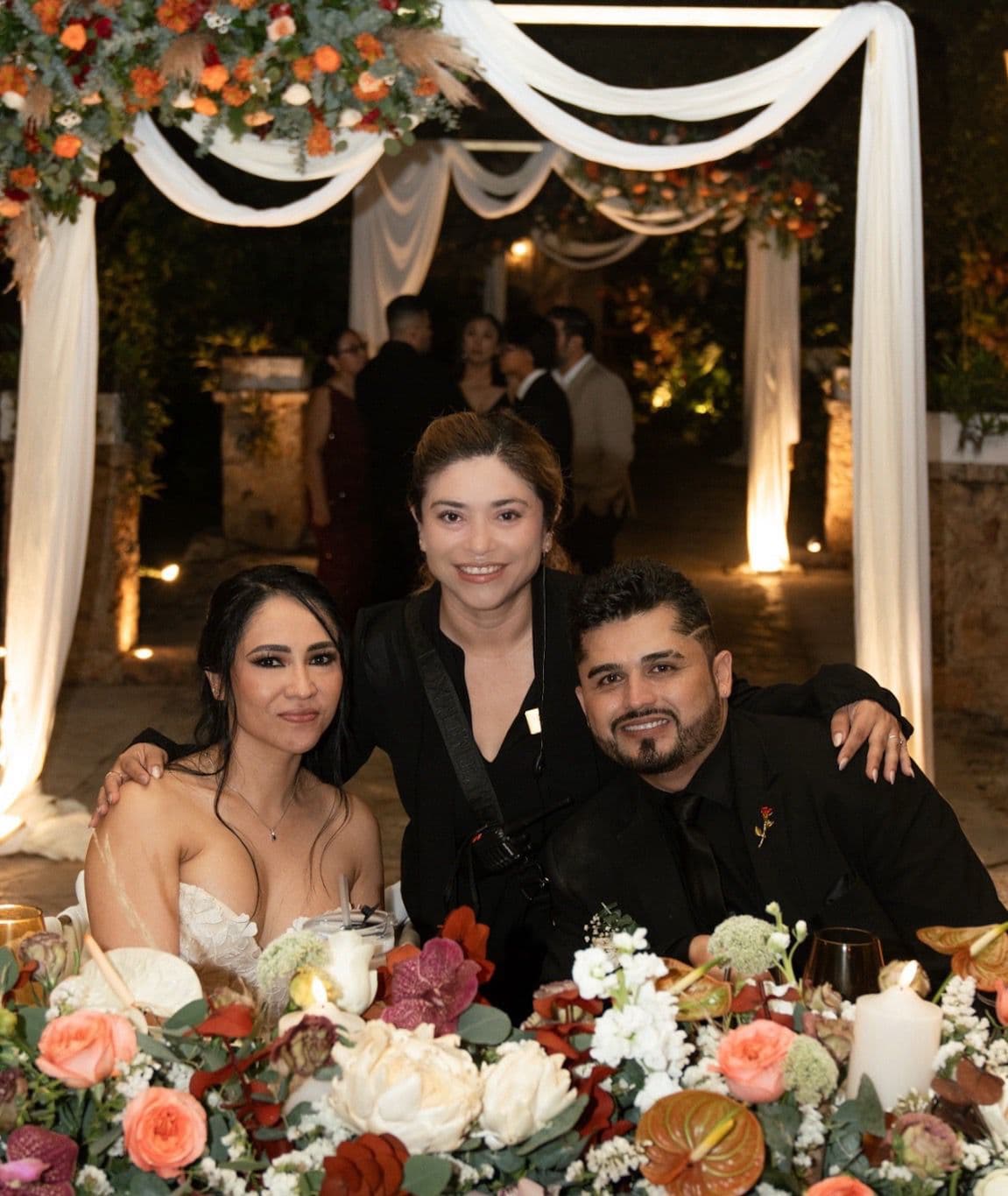
The third is day-of direction. On the wedding day, someone has to receive vendors, monitor timelines, solve the inevitable unexpected issue, and protect your experience so you can focus solely on getting married. That someone is the planner and their team, not your mother or your maid of honor.
Planner, coordinator, and "venue coordinator" are not the same thing
This confusion costs money and heartache, so it's worth clearing up.
- Full-service wedding planner: accompanies you from start to finish. Design, budget, vendor selection, logistics, and day-of direction. This is the most complete option and most recommended for a destination wedding.
- Month-of coordinator: comes in the final weeks to execute what you've already contracted and direct the day. It works if you want to organize most of it yourself and only need expert hands at the end. For a destination wedding, it often falls short.
- Venue coordinator: works for the venue, not for you. They handle what happens within that space (setup, venue schedules), but they don't protect your overall budget or coordinate your outside vendors. It's a support role, never a substitute for your planner.
If you take away only one thing from this section, let it be this: the venue coordinator is not your wedding planner, even if they sometimes present themselves as one.
Why it matters more in a destination wedding
For a local wedding, you can improvise: you live nearby, you know vendors, you can stop by to review things any Tuesday. For a destination wedding, you can't. These are the reasons a planner becomes nearly indispensable when your wedding is far from home:
- Distance. You can't visit the florist every week. You need someone on the ground who can be your eyes and hands.
- Local network. A destination planner's value lies in their contacts: proven vendors in that specific region, not generic ones.
- Guest logistics. Accommodations, airport transfers, weekend activities. A destination wedding experience spans three days, not five hours.
- Legal and administrative details. If there's a civil or religious ceremony, timelines and requirements vary from state to state in Mexico.
- Language and cultural bridge. If some of your guests are coming from abroad, the planner becomes a communication bridge as well.
How much a wedding planner costs in Mexico
Let me be frank: there's no single price, and be wary of anyone who gives you a fixed figure before knowing your wedding. What does exist are three common fee structures in the industry, and it's worth learning to recognize them:
- Percentage of total budget. One of the most widely used schemes internationally; typically falls in the double-digit range of your total event cost. The logic: greater complexity and budget means greater coordination work.
- Flat fee. A fixed amount for the complete project, regardless of how much you spend on vendors. It offers predictability and removes the incentive to inflate the budget.
- Scope-based packages. Full design, partial coordination, or day-of direction only, each with its own price. Useful when you're clear on how much you want to delegate.
More important than the number is what's included. Always ask in writing for the scope: how many meetings, how many vendors they coordinate, if they direct the day with their own team, how many people will be there on the wedding day, and what happens if something goes off plan. Two quotes at the "same price" can be radically different in what they actually deliver.
How to choose yours: the checklist that actually matters
Gathering three or four candidates and comparing them seriously is what separates a smooth wedding from one full of headaches. Here's what I'd review:
Real portfolio, not just pretty pictures. Ask to see complete weddings they've produced, not individual photos. Make sure they match your wedding in size and style. An intimate 40-person wedding and a 300-person one aren't organized the same way.
Specific experience in destination weddings. It's not the same to organize in your own city as to welcome 200 out-of-town guests. Ask how many destination weddings they've directed and in which regions.
Their vendor network. Ask who they typically recommend and why. A planner with a solid, honest network is worth their weight in gold; one who only works with whoever gives them commission is not.
How they communicate. Over the coming months, you'll be talking a lot. If they take days to respond during the initial courtship, imagine how they'll be under pressure. Speed and clarity now are a preview of how they work.
Written contract. Scope, payment schedule, what happens if you change dates, cancellation policy, how many team members will be there on event day. If something isn't in the contract, it doesn't exist.
References. Ask for contact information for two or three previous couples and call them. A ten-minute call tells you more than any portfolio.
Red flags
- They promise everything under the sun and never say "that's not possible" or "that would cost more."
- They won't put the scope in writing.
- They pressure you to sign "today for a special offer."
- They have no team on the wedding day and plan to direct everything solo.
- Their references are vague or they refuse to provide any.
When to hire them in your timeline
For a destination wedding, the planner should be one of your first vendors to meet, ideally as soon as you have a tentative date and a budget range. Why so early? Because they help you choose the destination and venue with a clear head, and because the best local vendors book months in advance. Hiring late leaves you with everyone else's leftover calendar slots.
A healthy sequence looks roughly like this: define your budget and guest count, meet and choose your planner, and from there, together you close in on venue, catering, and the rest of your team. Order matters.
Where Katiblé fits in all this
At Katiblé, we bring together destination wedding professionals in Mexico in one place, so comparing wedding planners (and the rest of your team) stops being hours of hunting through social media. The idea is simple: you find real profiles with their work on display, and contact is direct. You decide who to talk to; we save you the tedious part of finding them.
Choosing your wedding planner well is probably the decision that will have the most impact on how you experience your wedding. Take the time to gather options, compare them with this checklist in hand, and trust both the portfolio and how they make you feel in the conversation. That combination rarely fails.
Do I need a wedding planner if my destination wedding is small?
Yes, even if the scope is smaller. A small intimate wedding still has remote logistics, vendors to coordinate, and a day to direct. For smaller events, many couples opt for a coordination package rather than full planning, but having someone expert in the location still makes the difference between enjoying the day and spending it handling loose ends.
What's the difference between a wedding planner and the coordinator my venue includes?
The venue coordinator works for the venue and handles what happens within that space: setup, schedules, and venue services. Your wedding planner works for you: they protect your complete budget, gather and coordinate all your outside vendors, and direct the overall experience of the weekend. These are complementary roles, not interchangeable ones.
How far in advance should I hire my wedding planner?
Ideally, meet them among your first vendors, as soon as you have a tentative date and a budget range. For a destination wedding, this usually means several months in advance, because the planner helps you choose your destination and venue, and because the best local vendors book early. Hiring last-minute limits your options and inflates costs.
How do I know if a wedding planner is trustworthy if I don't know them in person?
Review complete weddings from their portfolio similar to yours, ask for references from previous couples and call them, confirm they put scope and payments in writing in a contract, and observe how they communicate during the quotation phase. Clarity, quick response times, and willingness to document everything are the best signs you're on the right track.
Frequently asked questions
What's the difference between a wedding planner and a day-of coordinator?
The planner accompanies you from budget and vendor selection through the event. The day-of coordinator comes in the final weeks to execute what you've already put together. They cost differently and solve different problems.
When do I hire them?
Before you reserve the venue, if you're hiring a full planner. Their greatest value is in helping you choose the right location and review the contract, and that's lost if they arrive after you've already signed.
Does the planner earn commission from vendors?
Some do and some don't, and both structures are legitimate as long as they tell you. Ask directly in your first meeting: if their income depends on who they recommend you to, you need to know that to read their suggestions with that context.
What should I ask for before signing?
Weddings similar in size and style to yours, references from two previous couples, and clarity on who will physically be there on your wedding day. In larger teams, the person who sells you isn't always the one who coordinates you.
Can I organize my destination wedding without a planner?
Yes, if you live near the destination or if your wedding is small with a closed package. It gets complicated when you're coordinating eight or ten vendors remotely without being able to supervise setups.
See what your wedding will cost
An estimated budget based on guest count and destination. Free, in about a minute.
For vendorsGet listed in the Katiblé catalogue
We don't send you fake leads — we send the ones who actually book. Your clients plan their events here and find you.
Planning your wedding in México?
Sign up free and get your WeddingCode to earn cashback on every booking.
Sign up free