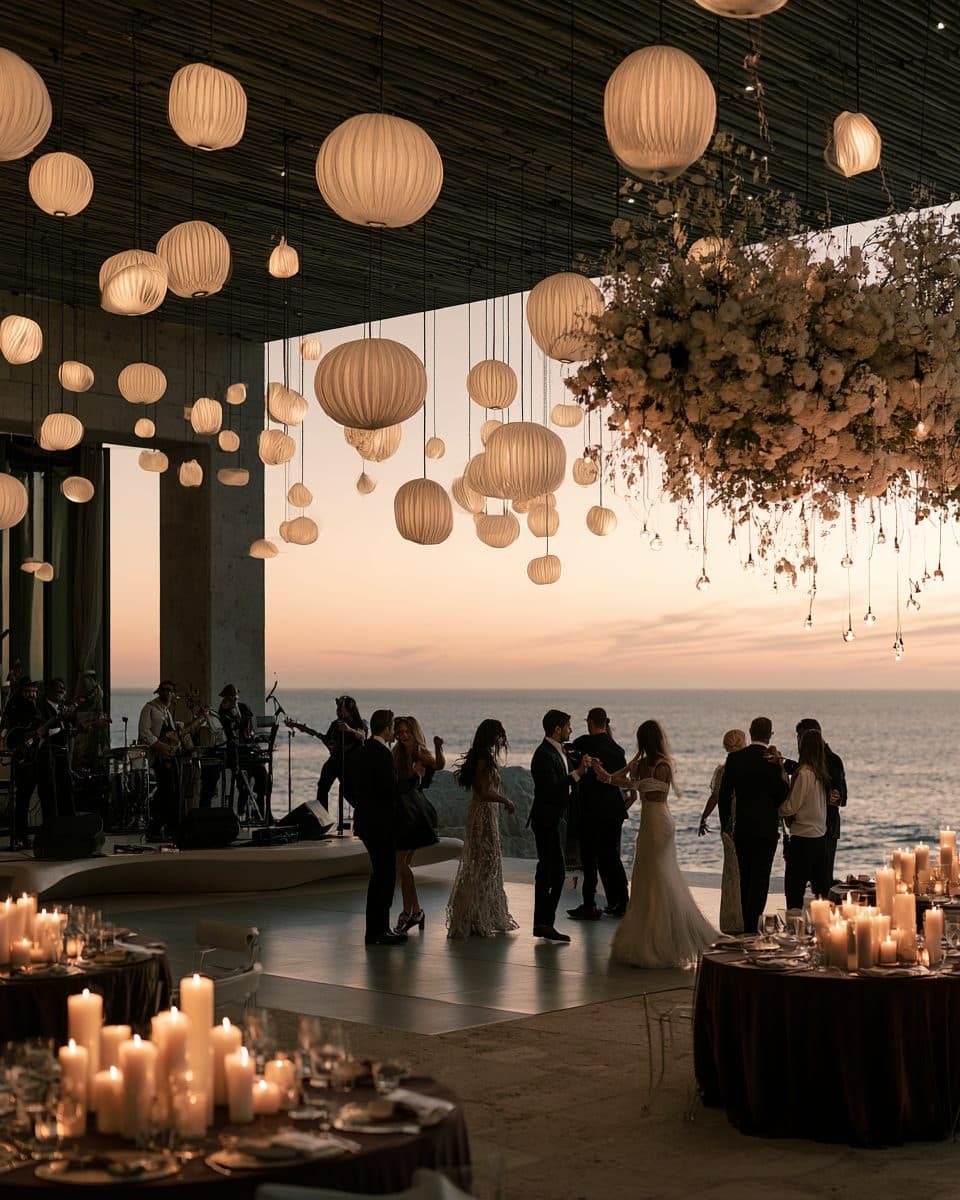
Wedding Music in Querétaro: DJ, Mariachi and Banda at Hacienda or Vineyard
Almost every bride getting married in Querétaro chooses the venue first and leaves the music for last. It's a logical order, but it has a trap: in Querétaro the venue *determines* the music. A hacienda with three courtyards, an open vineyard in Ezequiel Montes, or a closed salon in the historic center present completely different sound challenges, and the same excellent DJ can sound spectacular in one and disastrous in another.
This guide is about that: not just what type of music to hire, but how to make it sound good in the kind of space where people actually get married in Querétaro.
Why music planning works differently here
The wedding market in Querétaro concentrates on two formats that share one characteristic: they are open and spread across multiple spaces.
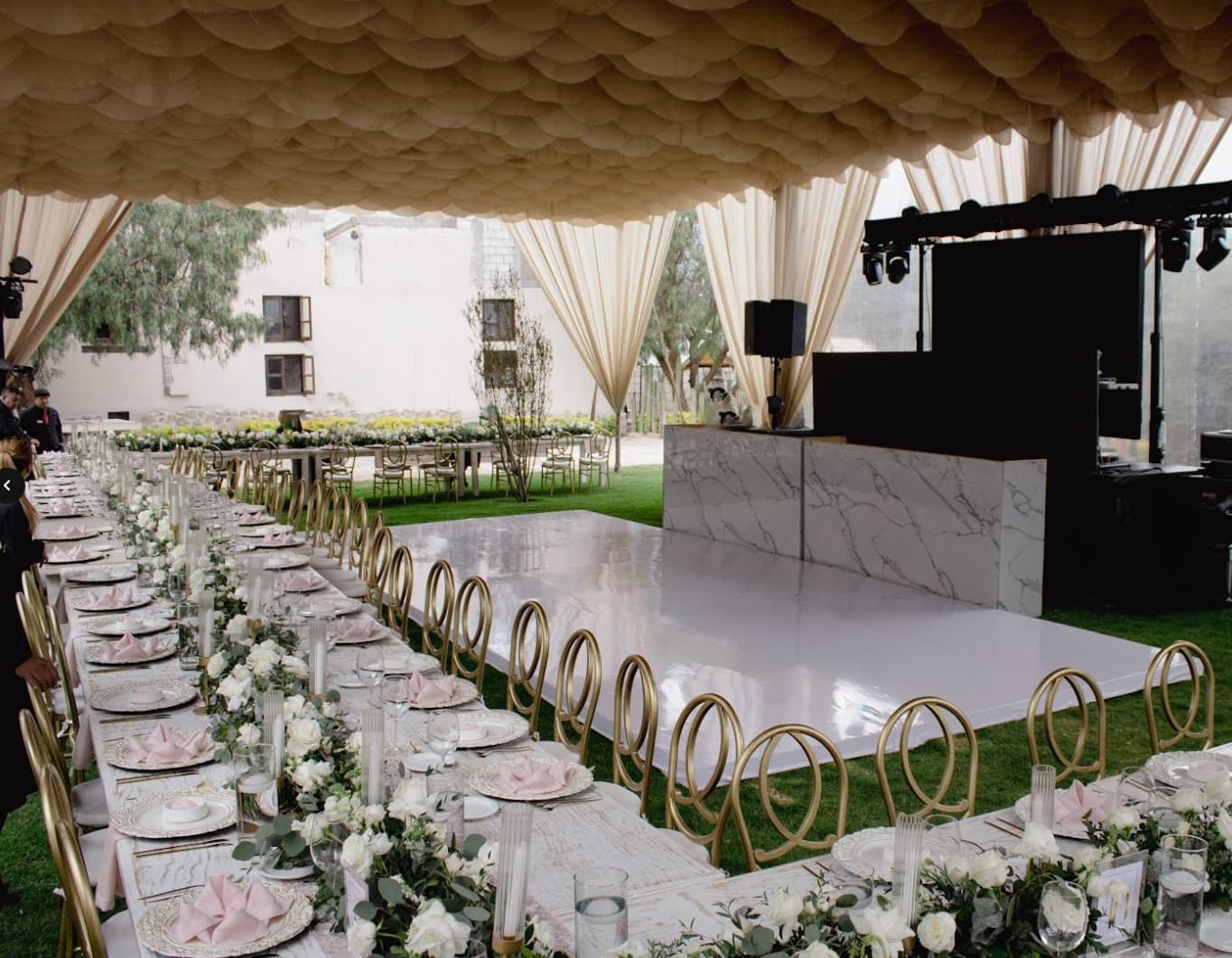
Haciendas. They almost always give you more than one space: chapel or garden for the ceremony, a courtyard or corridor for the cocktail, and a salon or esplanade for the reception. That means you don't have *one* wedding to sound, you have three moments in three different locations, with walks in between.
Vineyards. The Tequisquiapan, Ezequiel Montes and Bernal area is about an hour's drive from Querétaro city. They are beautiful and very open spaces, surrounded by vineyards and sometimes without electrical infrastructure designed for a twelve-hour event.
Add to this two conditions of the Bajío that do affect sound: you're above 1,800 meters in elevation, and temperature drops sharply after sunset. The nighttime cold doesn't damage properly installed equipment, but it does affect the tuning of string and wind instruments, and completely changes how long your guests can tolerate time in an open garden without heaters.
None of this is solved by choosing better music. It's solved by asking better questions.
The four puzzle pieces
Each format solves something different and fails at something different. What matters is not which is "better," but what gap each one fills.
Strings, guitar or harp. These are for the ceremony and the first part of the cocktail. Their strength is emotion: the bride's entrance with a live quartet cannot compare to a recorded track. Their limitation is volume: in an open garden with wind, an unamplified quartet simply won't reach the back row. If your ceremony is outdoors, you need microphones and speakers even if the musicians are acoustic.
Mariachi. The most flexible piece of all and the most underutilized. It works to receive guests, for the cocktail, for a surprise serenade before the reception, or to lift the energy at midnight when the dance floor is cooling down. They almost always work by the hour or by number of songs, and don't need much infrastructure. Their limitation: they can't sustain four hours of dance music.
DJ. The one who controls the energy curve for the entire night and who normally brings the sound equipment for the whole wedding. A good DJ isn't the one with the best music; it's the one who reads the floor and knows when to lower the tempo. Their limitation: without stage presence, the reception feels flat compared to live music.
Banda or versatile group. The option with the highest impact for the central block of the reception. It needs more space, more electrical power, and more setup and sound check time than any other option. Their limitation: they take breaks. If you hire only banda, you'll have twenty-minute silences on the dance floor, and that's when your guests disappear.
The most common combination in Querétaro is strings or guitar at the ceremony, mariachi at the cocktail, and DJ for the entire reception, with optional banda for the two central hours. But the real decision isn't how many groups you hire, but who covers the gaps between them.
How the day comes together, block by block
Think of your wedding as a timeline with no silence. Every transition is a risk.
- Guest reception. Starts before the ceremony, when people arrive and don't know what to do. It's the easiest moment to forget and the one that creates the most discomfort if it's silent.
- Ceremony. You need three defined pieces: entrance, key moments, and exit. And microphones for the couple and for whoever is officiating, not just for the music.
- Cocktail. The longest block and the most forgiving. This is where mariachi fits.
- Reception entrance and first dances. The point of highest coordination all night. Someone has to announce, and that someone needs to be agreed upon in writing.
- Central reception. Banda, DJ, or both alternating.
- Closing. Decide in advance if it ends with high energy or something calm. And confirm the venue's time limit.
If you're moving your guests from one space to another, you need sound on both sides during the transition. A silent garden while people walk toward the salon is exactly where a wedding loses momentum.
The problem almost nobody warns you about
Sounding an open space is not the same as sounding a salon, and this is where most hacienda and vineyard weddings break down.
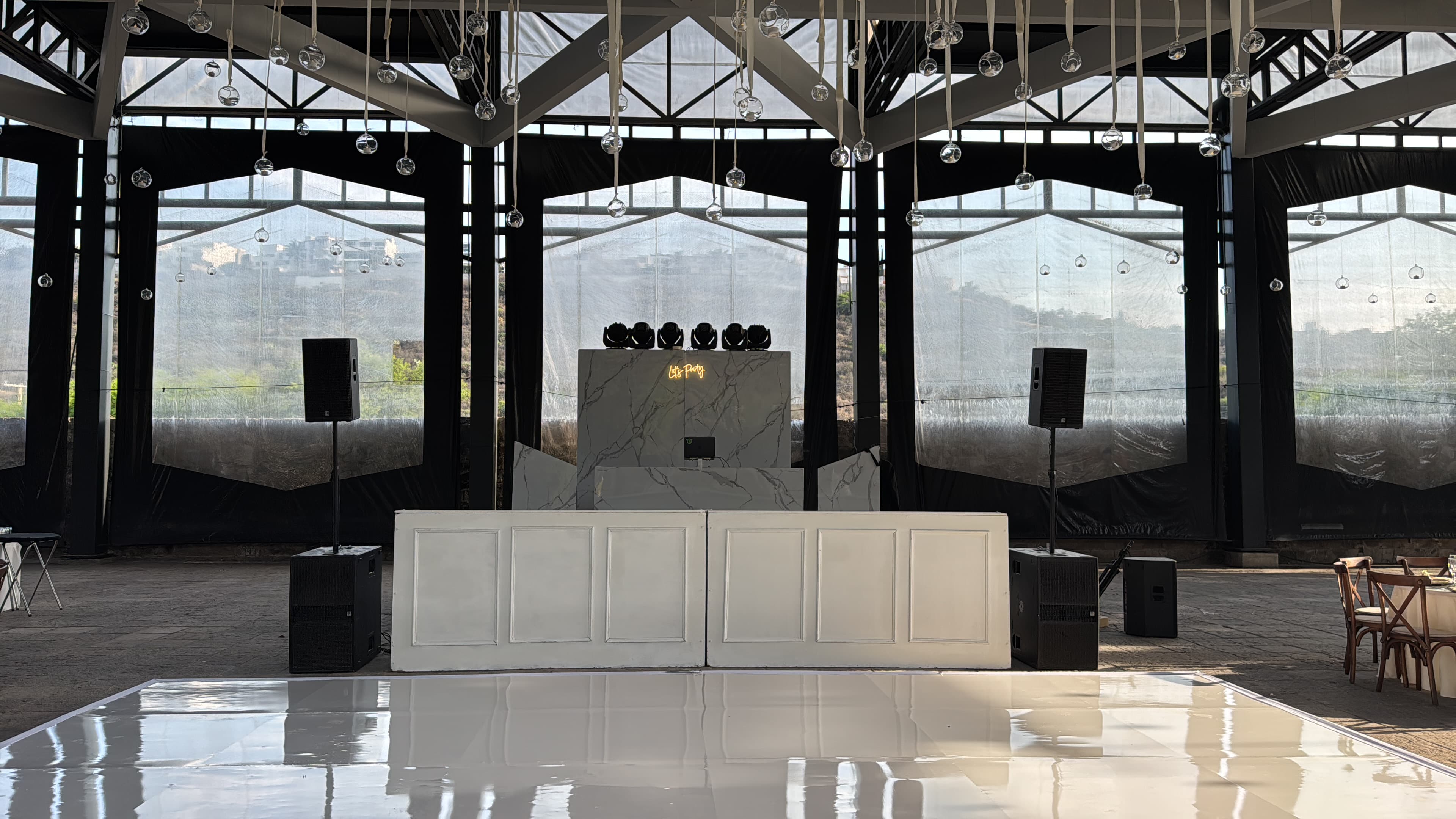
Zoning. If you have three spaces, you need equipment in three spaces, or a plan to move and reinstall between blocks. Ask explicitly: does the price include setting up in more than one location, or just one?
Power. Many vineyards and haciendas don't have the electrical load for banda, lighting, and kitchen at the same time. Someone needs to rent a generator. Find out who: the venue, the music provider, the planner, or you. This is the question most often left without an owner until the day of the event.
Wind. In the open air, sound disperses and wind gets into the microphones. It's solved with more speaker points and windscreens, not by raising the volume.
Time limit. Each hacienda and each municipality has its own schedule for outdoor music, and several haciendas require lowering the volume or closing earlier than you might expect. Don't assume: get it in writing from the venue before hiring hours of music you might not be able to use.
Rain. Between June and September it rains in the Bajío. Sound equipment is the first thing that gets shut off if there's no tent or roof. Your rain backup plan needs to include where the sound equipment goes, not just where guests sit.
Questions that change the quote
I'm not going to give you invented price ranges: in Querétaro music quotes vary greatly depending on venue, date, and hours, and a false figure would hurt you more than having none. What I can give you are the variables that move the number, so you can compare apples to apples.
- Hours of service and exact cost of overtime hours.
- Sound and lighting equipment included, and for how many spaces.
- Travel allowance and transportation if the venue is outside Querétaro city.
- Number of musicians in the banda or mariachi, which is almost never fixed.
- Who serves as master of ceremonies and whether that's charged separately.
- Sound check: if it's included and how much time before the event they need access to the venue.
- Crew meals, which in twelve-hour weddings is a real line item.
If you want to place music within your wedding budget, check our guide on how much a wedding costs in Querétaro and work from that framework.
What must be in writing
- Time of arrival, setup, start, and finish.
- Exact spaces where equipment will be installed.
- List of required songs and "do not play" list.
- Who announces each moment.
- Plan B for equipment failure or musician absence.
- Cancellation and rescheduling policy.
- Electrical requirements, with the load they need.
That last point sounds technical and boring. It's the one that keeps your reception from going dark at eleven at night.
Mistakes that repeat themselves
- Hiring by price without comparing hours. Two quotes with the same fee can differ by three hours of service.
- Leaving the generator with no clear owner.
- Not asking the venue's time limit and paying for hours you can't use.
- Forgetting ceremony sound because the musicians are acoustic.
- Hiring only banda and discovering they take breaks.
- No sound check at venues outside the city, where equipment arrives just in time with no room for error.
How katiblé solves it
At katiblé you request quotes from DJs, mariachis, and groups that work Querétaro and the vineyard zone, with responses in minutes and the same variables on the table, so you can truly compare. Your invitation costs nothing, and what you hire within katiblé returns cashback to your wedding fund: the part of music that today is only an expense can come back to you as budget for something else. Your wedding can pay for itself, and this is one of the categories where you see it most.
Frequently asked questions
Do I need both DJ and mariachi, or can I choose just one?
You can choose just one, but they solve different things. Mariachi gives identity and works in short blocks: reception, cocktail, serenade. The DJ sustains energy throughout the entire reception and normally provides the wedding's sound equipment. If your budget only allows for one and you want the dance floor full until the end, the DJ is the safer choice. If your wedding is daytime, short, and has many international guests, mariachi alone might be sufficient.
How many hours of music should I book?
Count from when the first guest arrives, not from when the ceremony starts. At a typical hacienda wedding in Querétaro that usually adds up to between eight and ten hours of continuous sound, even if live groups only cover certain blocks within that range. Book for the entire timeline and confirm the venue's time limit beforehand, so you don't pay for hours you won't be able to use.
Is sound equipment included in the quote?
Not always, and it's the number one cause of surprises. Some DJs include equipment for all spaces, others only for the main dance floor, and many live groups assume someone else is providing the sound. Ask for the quote to explicitly state how many sound points it covers and whether it includes microphones for the ceremony.
Do musicians charge extra to go to Tequisquiapan, Bernal, or Ezequiel Montes?
Almost always yes. The vineyard zone is about an hour from Querétaro city, and that translates to travel, longer setup time, and sometimes lodging if the event ends in the early morning hours. Ask for it itemized from the first quote: a provider cheaper on base rate can end up more expensive with travel fees.
What happens if it rains on my wedding day?
Sound is the first thing protected and the first thing shut down. Before signing, define with the venue and the music provider where equipment will be set up in case of rain, if that area has electricity, and whether reinstalling has an additional cost. Between June and September in the Bajío this conversation is not optional.